The Last Station (2009) - IMDb
The Last Station (2009) - IMDb
The Last Station2009
R
1h 52m


Play trailer2:06
26
9 Videos
99+ Photos
Period DramaBiographyDramaRomance
A historical drama that illustrates Russian author Leo Tolstoy's (Christopher Plummer's) struggle to balance fame and wealth with his commitment to a life devoid of material things.
6.9/10
19K
Rate
Director
Michael Hoffman
Writers
Michael Hoffman
Jay Parini
Stars
Helen Mirren
James McAvoy
Christopher Plummer
Add to Watchlist
Added by 36.9K users93User reviews
182Critic reviews
76Metascore
See production info at IMDbPro
===
Summaries
A historical drama that illustrates Russian author Leo Tolstoy's (Christopher Plummer's) struggle to balance fame and wealth with his commitment to a life devoid of material things.
The Countess Sofya Andreevna Tolstoy (Dame Helen Mirren), wife and muse to Leo Tolstoy (Christopher Plummer), uses every trick of seduction on her husband's loyal disciple, whom she believes was the person responsible for Tolstoy signing a new will that leaves his work and property to the Russian people.
—IMDb Editors
In 1910, acclaimed Russian author Lev Tolstoy (Christopher Plummer), in the later stage of his life, works rather than a writer, but as the leader of the Tolstoyan Movement, whose basic tenets are brotherly love and world peace through pacifism, and a denouncement of material wealth and physical love. His chief follower is Vladimir Chertkov (Paul Giamatti), who does whatever he requires to advance the cause. Chertkov hires a young man named Valentin Bulgakov (James McAvoy) to be Tolstoy's personal secretary in carrying out this work. Once ensconced in the life on the estate where much of the work is taking place, Bulgakov quickly learns that many there take from the movement only what he or she wants or believes. Also chief amongst the movement's wants is the deeding of all of Tolstoy's writings to the people, so that after his death, it will become public domain. Tolstoy's wife, the Countess Sofya Andreevna Tolstoy (Dame Helen Mirren), believes that her husband's writings are rightfully hers after he dies, as she wants and believes she deserves the monetary benefits derived from such. This places a strain between those in the movement, especially Chertov and the Tolstoys' daughter Sasha (Anne-Marie Duff), and the Countess. Bulgatov acts as the mediator between the parties, he who feels he needs to do what is truly in Tolstoy's heart regardless of what Tolstoy may say or do.
—Huggo
====
It’s great to be Leo Tolstoy, but not so great to be Mrs. Tolstoy

 DRAMA
DRAMA
112 minutes ‧ R ‧ 2010
Roger Ebert
February 3, 2010
4 min read
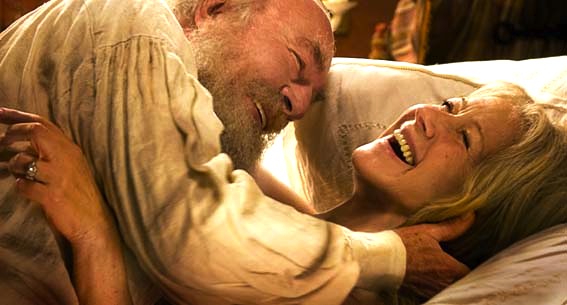
Christopher Plummer and Helen Mirren in "The Last Station."
Watching “The Last Station,” I was reminded of the publisher Bennett Cerf’s story about how he went to Europe to secure the rights to James Joyce’s Ulysses.
“Nora, you have a brilliant husband,” he told Joyce’s wife. “You don’t have to live with the bloody fool,” she responded.
If Joyce was a drunk and a roisterer, how different was the Russian novelist Leo Tolstoy, who was a vegetarian and pacifist, and recommended (although did not practice) celibacy? “The Last Station” focuses also on his wife, Sofya, who after bearing his 13 children thought him a late arrival to celibacy and accused him of confusing himself with Christ. Yet it’s because of the writing of Joyce and Tolstoy that we know about their wives at all. Well, the same is true of George Eliot’s husband.
“The Last Station” focuses on the last year of Count Tolstoy (Christopher Plummer), a full-bearded Shakespearian figure presiding over a household of intrigues. The chief schemer is Chertkov (Paul Giamatti), his intense follower, who idealistically believes Tolstoy should leave his literary fortune to the Russian people. It’s just the sort of idea that Tolstoy might seize upon in his utopian zeal. Sofya (Helen Mirren), on behalf of herself and her children, is livid.
Chertkov, the quasi-leader of Tolstoy’s quasi-cult, hires a young man named Valentin (James McAvoy) to become the count’s private secretary. In this capacity, he is to act as a double agent, observing moments between Leo and Sofya when Chertkov would not be welcome.
It might be hard for us to understand how seriously Tolstoy was taken at the time. To call him comparable in stature to Gandhi would not be an exaggeration, and indeed Gandhi adopted many of his ideas. Tolstoy in his 82nd year remained active and robust, but everyone knew his end might be approaching, and the Russian equivalent of paparazzi and gossips lurked in the neighborhood. Imagine Perez Hilton staking out J.D. Salinger.
Tolstoy was thought a great man and still is, but in a way his greatness distracts from how good he was as a writer. When I was young, the expression “reading War and Peace” was used as a synonym for idly wasting an immense chunk of time. Foolishly believing this, I read Dostoyevsky and Chekhov but not Tolstoy, and it was only when I came late to Anna Karenina that I realized he wrote page-turners. In Time magazine’s compilation of 125 lists of the 10 greatest novels of all time, War and Peace and Anna Karenina placed first and third. (You didn’t ask, but Madame Bovary was second; Lolita, fourth, and Huckleberry Finn, fifth.)
“The Last Station” has the look of a Merchant-Ivory film, with the pastoral setting, the dashing costumery, the meals taken on lawns. But did Merchant and Ivory ever deal with such a demonstrative family? If the British are known for suppressing their emotions, the Russians seem to bellow their whims. If a British woman in Merchant-Ivory land desires sex, she bestows a significant glance in the candlelight. Sofya clucks like a chicken to arouse old Leo’s rooster.
The dramatic movement in the film takes place mostly within Valentin, who joins the household already an acolyte of Tolstoy. Young and handsome, he says he is celibate. Sofya has him pegged as gay, but Masha (Kerry Condon), a nubile Tolstoyian, pegs him otherwise. Valentin also takes note that Tolstoy, like many charismatic leaders, exempts himself from his own teachings. The 13 children provide a hint, and his private secretary cannot have avoided observing that although the count and countess fight over his will, a truce is observed at bedtime, and the enemies meet between the lines.
As the formidable patriarch, Christopher Plummer avoids any temptation (if he felt one) to play Tolstoy as a Great Man. He does what is more amusing; he plays him as a Man Who Knows He Is Considered Great. Helen Mirren plays a wife who knows his flaws, but has loved him since the day they met. To be fair, no man who wrote that fiction could be other than wise and warm about human nature.
Some women are simply sexy forever. Helen Mirren is a woman like that. She’s 64. As she enters her 70s, we’ll begin to develop a fondness for sexy septuagenarians.
Mirren and Plummer make Leo and Sofya Tolstoy more vital than you might expect in a historical picture. Giamatti has a specialty in seeming to be up to something, and McAvoy and Condon take on a glow from feeling noble while sinning. In real life, I learn, Tolstoy provided Sofya with more unpleasant sunset years, but could we stand to see Helen Mirren treated like that?
Tweet
Share
Share
Pin
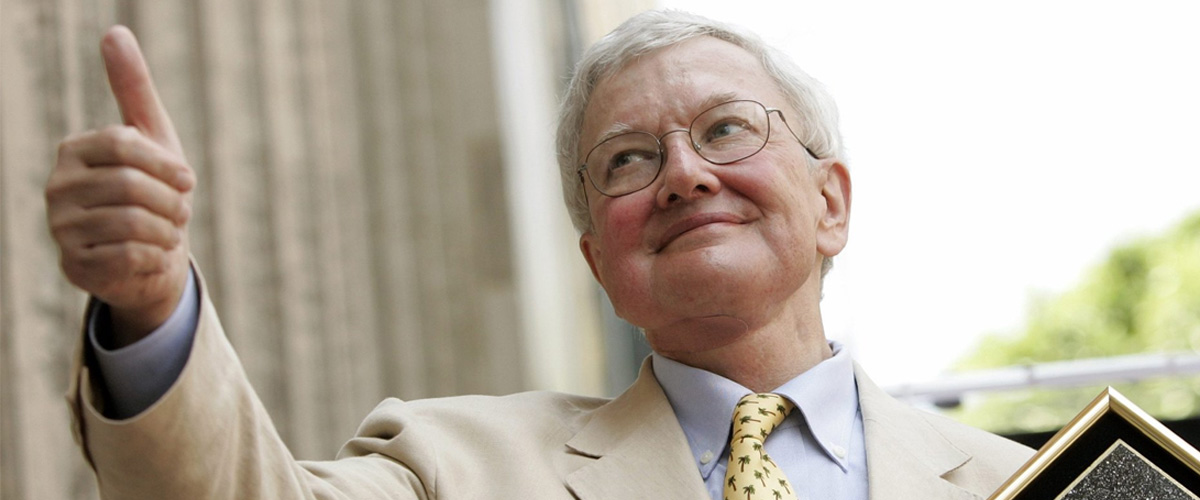
Roger Ebert
Roger Ebert was the film critic of the Chicago Sun-Times from 1967 until his death in 2013. In 1975, he won the Pulitzer Prize for distinguished criticism.
====
Review: 'The Last Station' glimpses at Tolstoys
REVIEW
By Mick LaSalle,
Chronicle Movie Critic
Feb 5, 2010
The Last Station
0:08
/
0:46
Watch More
exp-customer-logo
POLITE APPLAUSE Drama. Starring Helen Mirren, Christopher Plummer, Paul Giamatti and James McAvoy. Directed by Michael Hoffman. (R. 120 minutes. At Bay Area theaters.)
In this film publicity image released by Sony Pictures Classics, Christopher Plummer is shown in a scene from, "The Last Station." (AP Photo/Sony Pictures Classics, Stephan Rabold)
In this film publicity image released by Sony Pictures Classics, Christopher Plummer is shown in a scene from, "The Last Station." (AP Photo/Sony Pictures Classics, Stephan Rabold)
Stephan Rabold/AP
It wasn't easy being Countess Tolstoy, stuck in the same house with a rich, world-renowned husband who insisted on living like a peasant and a saint, when he was neither. How much fun could it have been to see him surrounded by worshipers, sycophants and sponges, knowing that at any minute, in some grand spiritual gesture, he might sign away all his wealth - to them?
Advertisement
Article continues below this ad
TAFE SA
Capture your creativity
If you have a creative mind, find your creative career. Study Photography in 2025.
Learn More
Sponsored By TAFE SA
For a century, the wife of the mighty author of "War and Peace" has been usually portrayed as a nagging, materialistic harpy, but "The Last Station" tells the story of Leo Tolstoy's last year from a refreshing new perspective. It stars Helen Mirren as the countess, which automatically makes her both likable and forceful. The film presents her as a woman surrounded by enemies in her own home, with a much older husband so guilt-ridden about his wealth that he might be willing to buy his way into heaven - at the expense of his wife's inheritance.
The appeal of "The Last Station" is not in what it reveals about the Tolstoys' domestic life. In fact, few will come away from the film believing they've seen anything like the whole story of this marriage or anything close to its genuine dynamic. However, they will see Mirren in a juicy role that showcases her in a variety of modes - panicky, bitchy, seductive, warm, maternal, scheming, self-knowing, funny. And they will see Christopher Plummer (as Tolstoy) wearing big facial hair and peasant clothes, laughing in that time-honored British version of Russian gusto.
No one is joking in "The Last Station," but it's all in fun, nonetheless. You won't believe for one second that Plummer wrote "Anna Karenina," but after a while you will accept that, in this alternate universe, Tolstoy probably did sing "Edelweiss" in "The Sound of Music." You will even grow to like this casting, because Plummer is big and generous in the role, bogus and yet sincere, and because there's something delightful and ridiculous about actors. An actor can be 80 years old, but give him fake whiskers and a pair of heavy boots, and he'll stomp through a two-hour movie like a happy kid.
Meanwhile, as his elders have all the fun, James McAvoy has the role of straight man in this enterprise, as Valentin, hired to be Tolstoy's assistant. A devoted "Tolstoyan," one of a group of followers who have set up a religion based on Tolstoy's teachings, Valentin is devoted to chastity and lives in a commune. As a Tolstoyan, it's also expected that he should be the enemy of Countess Tolstoy. In fact, his superiors in the movement - particularly Paul Giamatti as Chertkov, the Tolstoyan leader - have placed young Valentin in the household as a spy, to report on everything Mrs. Tolstoy might do to thwart the Tolstoyan movement.
Advertisement
Article continues below this ad
In films such as "Wanted" and "The Last King of Scotland," McAvoy mastered the fine art of playing discomfort, and "The Last Station" gives him lots of opportunities to be uncomfortable: He works for his hero. He keeps ending up in the middle of domestic arguments. What's more, he finds his loyalties shifting from the count to the countess.
Valentin provides an interesting window into the Tolstoy household, and his own journey from Tolstoyan asceticism to a more balanced embrace of life gives the film an extra dimension. But for much of the action, he's little more than a witness, so ineffectual that I just assumed he was a fictional creation. In fact, Valentin Bulgakov was a real person - one who probably spent a lot of time just standing around.
Along the way, almost in passing, director Michael Hoffman shows celebrity culture, as it was forming in 1910 and the perennial difficulties of living a spiritually committed life while surrounded by fans and cameras. "The Last Station" doesn't necessarily add up as a completely coherent or satisfying statement, but all its elements are pleasing. This is light entertainment for a literate audience.
Advisory: This film contains strong language, nudity and simulated sex.
Advertisement
Article continues below this ad
TAFE SA
Want a creative career?
Capture your creativity across TV, cinema and digital. Study Screen & Media in 2025.
Sponsored By TAFE SA
Learn More
Feb 5, 2010
Photo of Mick LaSalle
Mick LaSalle
Movie Critic
Mick LaSalle is the film critic for the San Francisco Chronicle, where he has worked since 1985. He is the author of two books on pre-censorship Hollywood, "Complicated Women: Sex and Power in Pre-Code Hollywood" and "Dangerous Men: Pre-Code Hollywood and the Birth of the Modern Man." Both were books of the month on Turner Classic Movies and "Complicated Women" formed the basis of a TCM documentary in 2003, narrated by Jane Fonda. He has written introductions for a number of books, including Peter Cowie's "Joan Crawford: The Enduring Star" (2009). He was a panelist at the Berlin Film Festival and has served as a panelist for eight of the last ten years at the Venice Film Festival. His latest book, a study of women in French cinema, is "The Beauty of the Real: What Hollywood Can Learn from Contemporary French Actresses."
The Last Station2009
R
1h 52m
Play trailer2:06
26
9 Videos
99+ Photos
Period DramaBiographyDramaRomance
A historical drama that illustrates Russian author Leo Tolstoy's (Christopher Plummer's) struggle to balance fame and wealth with his commitment to a life devoid of material things.
6.9/10
19K
Rate
Director
Michael Hoffman
Writers
Michael Hoffman
Jay Parini
Stars
Helen Mirren
James McAvoy
Christopher Plummer
Add to Watchlist
Added by 36.9K users93User reviews
182Critic reviews
76Metascore
See production info at IMDbPro
===
Summaries
A historical drama that illustrates Russian author Leo Tolstoy's (Christopher Plummer's) struggle to balance fame and wealth with his commitment to a life devoid of material things.
The Countess Sofya Andreevna Tolstoy (Dame Helen Mirren), wife and muse to Leo Tolstoy (Christopher Plummer), uses every trick of seduction on her husband's loyal disciple, whom she believes was the person responsible for Tolstoy signing a new will that leaves his work and property to the Russian people.
—IMDb Editors
In 1910, acclaimed Russian author Lev Tolstoy (Christopher Plummer), in the later stage of his life, works rather than a writer, but as the leader of the Tolstoyan Movement, whose basic tenets are brotherly love and world peace through pacifism, and a denouncement of material wealth and physical love. His chief follower is Vladimir Chertkov (Paul Giamatti), who does whatever he requires to advance the cause. Chertkov hires a young man named Valentin Bulgakov (James McAvoy) to be Tolstoy's personal secretary in carrying out this work. Once ensconced in the life on the estate where much of the work is taking place, Bulgakov quickly learns that many there take from the movement only what he or she wants or believes. Also chief amongst the movement's wants is the deeding of all of Tolstoy's writings to the people, so that after his death, it will become public domain. Tolstoy's wife, the Countess Sofya Andreevna Tolstoy (Dame Helen Mirren), believes that her husband's writings are rightfully hers after he dies, as she wants and believes she deserves the monetary benefits derived from such. This places a strain between those in the movement, especially Chertov and the Tolstoys' daughter Sasha (Anne-Marie Duff), and the Countess. Bulgatov acts as the mediator between the parties, he who feels he needs to do what is truly in Tolstoy's heart regardless of what Tolstoy may say or do.
—Huggo
====
It’s great to be Leo Tolstoy, but not so great to be Mrs. Tolstoy
DRAMA112 minutes ‧ R ‧ 2010
Roger Ebert
February 3, 2010
4 min read
Christopher Plummer and Helen Mirren in "The Last Station."
Watching “The Last Station,” I was reminded of the publisher Bennett Cerf’s story about how he went to Europe to secure the rights to James Joyce’s Ulysses.
“Nora, you have a brilliant husband,” he told Joyce’s wife. “You don’t have to live with the bloody fool,” she responded.
If Joyce was a drunk and a roisterer, how different was the Russian novelist Leo Tolstoy, who was a vegetarian and pacifist, and recommended (although did not practice) celibacy? “The Last Station” focuses also on his wife, Sofya, who after bearing his 13 children thought him a late arrival to celibacy and accused him of confusing himself with Christ. Yet it’s because of the writing of Joyce and Tolstoy that we know about their wives at all. Well, the same is true of George Eliot’s husband.
“The Last Station” focuses on the last year of Count Tolstoy (Christopher Plummer), a full-bearded Shakespearian figure presiding over a household of intrigues. The chief schemer is Chertkov (Paul Giamatti), his intense follower, who idealistically believes Tolstoy should leave his literary fortune to the Russian people. It’s just the sort of idea that Tolstoy might seize upon in his utopian zeal. Sofya (Helen Mirren), on behalf of herself and her children, is livid.
Chertkov, the quasi-leader of Tolstoy’s quasi-cult, hires a young man named Valentin (James McAvoy) to become the count’s private secretary. In this capacity, he is to act as a double agent, observing moments between Leo and Sofya when Chertkov would not be welcome.
It might be hard for us to understand how seriously Tolstoy was taken at the time. To call him comparable in stature to Gandhi would not be an exaggeration, and indeed Gandhi adopted many of his ideas. Tolstoy in his 82nd year remained active and robust, but everyone knew his end might be approaching, and the Russian equivalent of paparazzi and gossips lurked in the neighborhood. Imagine Perez Hilton staking out J.D. Salinger.
Tolstoy was thought a great man and still is, but in a way his greatness distracts from how good he was as a writer. When I was young, the expression “reading War and Peace” was used as a synonym for idly wasting an immense chunk of time. Foolishly believing this, I read Dostoyevsky and Chekhov but not Tolstoy, and it was only when I came late to Anna Karenina that I realized he wrote page-turners. In Time magazine’s compilation of 125 lists of the 10 greatest novels of all time, War and Peace and Anna Karenina placed first and third. (You didn’t ask, but Madame Bovary was second; Lolita, fourth, and Huckleberry Finn, fifth.)
“The Last Station” has the look of a Merchant-Ivory film, with the pastoral setting, the dashing costumery, the meals taken on lawns. But did Merchant and Ivory ever deal with such a demonstrative family? If the British are known for suppressing their emotions, the Russians seem to bellow their whims. If a British woman in Merchant-Ivory land desires sex, she bestows a significant glance in the candlelight. Sofya clucks like a chicken to arouse old Leo’s rooster.
The dramatic movement in the film takes place mostly within Valentin, who joins the household already an acolyte of Tolstoy. Young and handsome, he says he is celibate. Sofya has him pegged as gay, but Masha (Kerry Condon), a nubile Tolstoyian, pegs him otherwise. Valentin also takes note that Tolstoy, like many charismatic leaders, exempts himself from his own teachings. The 13 children provide a hint, and his private secretary cannot have avoided observing that although the count and countess fight over his will, a truce is observed at bedtime, and the enemies meet between the lines.
As the formidable patriarch, Christopher Plummer avoids any temptation (if he felt one) to play Tolstoy as a Great Man. He does what is more amusing; he plays him as a Man Who Knows He Is Considered Great. Helen Mirren plays a wife who knows his flaws, but has loved him since the day they met. To be fair, no man who wrote that fiction could be other than wise and warm about human nature.
Some women are simply sexy forever. Helen Mirren is a woman like that. She’s 64. As she enters her 70s, we’ll begin to develop a fondness for sexy septuagenarians.
Mirren and Plummer make Leo and Sofya Tolstoy more vital than you might expect in a historical picture. Giamatti has a specialty in seeming to be up to something, and McAvoy and Condon take on a glow from feeling noble while sinning. In real life, I learn, Tolstoy provided Sofya with more unpleasant sunset years, but could we stand to see Helen Mirren treated like that?
Tweet
Share
Share
Pin
Roger Ebert
Roger Ebert was the film critic of the Chicago Sun-Times from 1967 until his death in 2013. In 1975, he won the Pulitzer Prize for distinguished criticism.
====
Review: 'The Last Station' glimpses at Tolstoys
REVIEW
By Mick LaSalle,
Chronicle Movie Critic
Feb 5, 2010
The Last Station
0:08
/
0:46
Watch More
exp-customer-logo
POLITE APPLAUSE Drama. Starring Helen Mirren, Christopher Plummer, Paul Giamatti and James McAvoy. Directed by Michael Hoffman. (R. 120 minutes. At Bay Area theaters.)
In this film publicity image released by Sony Pictures Classics, Christopher Plummer is shown in a scene from, "The Last Station." (AP Photo/Sony Pictures Classics, Stephan Rabold)
In this film publicity image released by Sony Pictures Classics, Christopher Plummer is shown in a scene from, "The Last Station." (AP Photo/Sony Pictures Classics, Stephan Rabold)
Stephan Rabold/AP
It wasn't easy being Countess Tolstoy, stuck in the same house with a rich, world-renowned husband who insisted on living like a peasant and a saint, when he was neither. How much fun could it have been to see him surrounded by worshipers, sycophants and sponges, knowing that at any minute, in some grand spiritual gesture, he might sign away all his wealth - to them?
Advertisement
Article continues below this ad
TAFE SA
Capture your creativity
If you have a creative mind, find your creative career. Study Photography in 2025.
Learn More
Sponsored By TAFE SA
For a century, the wife of the mighty author of "War and Peace" has been usually portrayed as a nagging, materialistic harpy, but "The Last Station" tells the story of Leo Tolstoy's last year from a refreshing new perspective. It stars Helen Mirren as the countess, which automatically makes her both likable and forceful. The film presents her as a woman surrounded by enemies in her own home, with a much older husband so guilt-ridden about his wealth that he might be willing to buy his way into heaven - at the expense of his wife's inheritance.
The appeal of "The Last Station" is not in what it reveals about the Tolstoys' domestic life. In fact, few will come away from the film believing they've seen anything like the whole story of this marriage or anything close to its genuine dynamic. However, they will see Mirren in a juicy role that showcases her in a variety of modes - panicky, bitchy, seductive, warm, maternal, scheming, self-knowing, funny. And they will see Christopher Plummer (as Tolstoy) wearing big facial hair and peasant clothes, laughing in that time-honored British version of Russian gusto.
No one is joking in "The Last Station," but it's all in fun, nonetheless. You won't believe for one second that Plummer wrote "Anna Karenina," but after a while you will accept that, in this alternate universe, Tolstoy probably did sing "Edelweiss" in "The Sound of Music." You will even grow to like this casting, because Plummer is big and generous in the role, bogus and yet sincere, and because there's something delightful and ridiculous about actors. An actor can be 80 years old, but give him fake whiskers and a pair of heavy boots, and he'll stomp through a two-hour movie like a happy kid.
Meanwhile, as his elders have all the fun, James McAvoy has the role of straight man in this enterprise, as Valentin, hired to be Tolstoy's assistant. A devoted "Tolstoyan," one of a group of followers who have set up a religion based on Tolstoy's teachings, Valentin is devoted to chastity and lives in a commune. As a Tolstoyan, it's also expected that he should be the enemy of Countess Tolstoy. In fact, his superiors in the movement - particularly Paul Giamatti as Chertkov, the Tolstoyan leader - have placed young Valentin in the household as a spy, to report on everything Mrs. Tolstoy might do to thwart the Tolstoyan movement.
Advertisement
Article continues below this ad
In films such as "Wanted" and "The Last King of Scotland," McAvoy mastered the fine art of playing discomfort, and "The Last Station" gives him lots of opportunities to be uncomfortable: He works for his hero. He keeps ending up in the middle of domestic arguments. What's more, he finds his loyalties shifting from the count to the countess.
Valentin provides an interesting window into the Tolstoy household, and his own journey from Tolstoyan asceticism to a more balanced embrace of life gives the film an extra dimension. But for much of the action, he's little more than a witness, so ineffectual that I just assumed he was a fictional creation. In fact, Valentin Bulgakov was a real person - one who probably spent a lot of time just standing around.
Along the way, almost in passing, director Michael Hoffman shows celebrity culture, as it was forming in 1910 and the perennial difficulties of living a spiritually committed life while surrounded by fans and cameras. "The Last Station" doesn't necessarily add up as a completely coherent or satisfying statement, but all its elements are pleasing. This is light entertainment for a literate audience.
Advisory: This film contains strong language, nudity and simulated sex.
Advertisement
Article continues below this ad
TAFE SA
Want a creative career?
Capture your creativity across TV, cinema and digital. Study Screen & Media in 2025.
Sponsored By TAFE SA
Learn More
Feb 5, 2010
Photo of Mick LaSalle
Mick LaSalle
Movie Critic
Mick LaSalle is the film critic for the San Francisco Chronicle, where he has worked since 1985. He is the author of two books on pre-censorship Hollywood, "Complicated Women: Sex and Power in Pre-Code Hollywood" and "Dangerous Men: Pre-Code Hollywood and the Birth of the Modern Man." Both were books of the month on Turner Classic Movies and "Complicated Women" formed the basis of a TCM documentary in 2003, narrated by Jane Fonda. He has written introductions for a number of books, including Peter Cowie's "Joan Crawford: The Enduring Star" (2009). He was a panelist at the Berlin Film Festival and has served as a panelist for eight of the last ten years at the Venice Film Festival. His latest book, a study of women in French cinema, is "The Beauty of the Real: What Hollywood Can Learn from Contemporary French Actresses."


Comments
Post a Comment