Metronom (film) - Wikipedia
Metronom (film)
| Metronom | |
|---|---|
_poster.jpg) Theatrical release poster | |
| Directed by | Alexandru Belc |
| Written by | Alexandru Belc |
| Produced by | Viorel Chesaru Cătălin Mitulescu Emmanuel Quillet Ruxandra Slotea Martine Vidalenc |
| Starring | Mara Bugarin Servan Lazarovici Vlad Ivanov Mihai Călin Andreea Bibiri Alina Brezunțeanu Mara Vicol |
| Cinematography | Tudor Vladimir Panduru |
| Edited by | Patricia Chelaru |
Production companies | Strada Film Midralgar Chainsaw Europe |
Release dates |
|
Running time | 102 minutes |
| Countries | Romania France |
| Language | Romanian |
Metronom is a 2022 drama film written and directed by Alexandru Belc in his directorial debut.[1][2] Starring Mara Bugarin and Servan Lazarovici accompanied by Vlad Ivanov, Mihai Călin, Andreea Bibiri, Alina Brezunțeanu and Mara Vicol.[3] It had its world premiere on May 24, 2022, at the 75th Cannes Film Festival where it competed for the Un Certain Regard and won Best Director.[4]
The film was named on the shortlist for Romanian's entry for the Academy Award for Best International Feature Film at the 95th Academy Awards,[5] but it was not selected.[6]
Synopsis
[edit]In 1972, Ana and Sorin are two teenagers who fall in love, but the young couple is forced to end their relationship when Sorin tells Ana that he is going to escape with his family to West Germany. After that, Ana and Sorin meet again, after the breakup, at the party of a colleague, Roxana. At the party, all the young people listen to the program "Metronom" by DJ Cornel Chiriac, broadcast by Radio Europa Liberă, a radio station banned at the time in Romania. The young people write a letter to Cornel Chiriac, through which they express their desire to leave the country under the communist regime. They are detained by the militia that was notified and forced to describe in detail their participation in an act seen as a protest against the regime.[7][8]
Cast
[edit]The actors participating in this film are:[9][10]
- Mara Bugarin as Ana
- Serban Lazarovici as Sorin
- Vlad Ivanov as Biriș
- Mihai Călin as Ana's father
- Andreea Bibiri as Ana's mother
- Alina Brezunțeanu as Sorin's mother
- Mara Vicol as Roxana
- Mihnea Moldoveanu as Geo
- Andrei Miercure as Silviu
- Măriuca Bosnea as Nicolate
- Eduard Chimac as Octav
- Tiberiu Zavelea as Tibi
- Claudia Soare as Maria
- Briana Macovei as Laura
- Pamela Iobaji as Mara
- Ana Bodea as Claudia
- Alin Florea as Ispas
- Alex Conovaru as Dinu
- Alexandru Nedelcu as Photographer
- Horațiu Bob as Security Guard 1
- Daniel Tomescu as Security Guard 2
Release
[edit]It had its world premiere on May 24, 2022[11] at the 75th Cannes Film Festival where it competed for the Un Certain Regard and won Best Director.[12] Then, it was screened on July 25, 2022, at the 39th Jerusalem Film Festival,[13] on January 31, 2023, at the Gothenburg International Film Festival,[14] etc. It was commercially released on November 4, 2022, in Romanian theaters.[15]
Reception
[edit]Critical reception
[edit]On the review aggregator website Rotten Tomatoes, 91% of 11 critics' reviews are positive, with an average rating of 7.6/10.[16]
Accolades
[edit]| Year | Award / Festival | Category | Recipient | Result | Ref. |
|---|---|---|---|---|---|
| 2022 | Cannes Film Festival | Un Certain Regard | Metronom | Nominated | [17] |
| Un Certain Regard - Best Director | Alexandru Belc | Won | |||
| Jerusalem Film Festival | Best International Film | Metronom | Won | [18] | |
| Adelaide Film Festival | Best Feature Film | Nominated | [19] | ||
| Chicago International Film Festival | New Directors Competition - Gold Hugo | Alexandru Belc | Nominated | [20] | |
| Camerimage | Best Cinematographer's Debut | Nominated | [21] | ||
| International Crime and Punishment Film Festival | Best Film | Metronom | Won | [22] | |
| Gijón International Film Festival | Best Feature Film | Won | [23] | ||
| Warsaw Film Festival | Crème de la Crème Competition | Nominated | [24] | ||
| Anonimul International Independent Film Festival | Best Feature Film | Nominated | [25] | ||
| 2023 | Trieste Film Festival | Nominated | [26] | ||
| Gopo Awards | Cătălin Mitulescu, Viorel Chesaru & Ruxandra Slotea | Nominated | [27][28][29] | ||
| Best Director | Alexandru Belc | Nominated | |||
| Best Debut Film | Metronom | Nominated | |||
| Best Actor in a Leading Role | Șerban Lazarovici | Nominated | |||
| Best Actress in a Leading Role | Mara Bugarin | Nominated | |||
| Best Screenplay | Alexandru Belc | Nominated | |||
| Best Cinematography | Tudor Vladimir Panduru | Won | |||
| Film Editing | Patricia Chelaru | Nominated | |||
| Best Sound | Alexandru Dumitru & Răzvan Ionescu | Nominated | |||
| Best Production Design | Bogdan Ionescu | Won | |||
| Best Costume Design | Ioana Covalciuc | Won | |||
| Best Make-up and Hair Styling | Irina Ianciuș & Marie-Pierre Hattabi | Won |
References
[edit]- ^ Hentea, Andreea (2022-11-04). ""Metronom" arată răspicat adevărul unei epoci. Iată de ce trebuie să-l vezi". TVmania.ro (in Romanian). Retrieved 2023-07-24.
- ^ ""Metronom", primul lungmetraj al lui Alexandru Belc, aplaudat la Festivalul de la Cannes şi apreciat de criticii străini". Observator (in Romanian). Retrieved 2023-07-24.
- ^ Ho, Rachel. "'Metronom' Finds a Sweetly Restrained Tempo". Exclaim!.
- ^ "Filmul românesc "Metronom", premiat la Festivalul de Film de la Cannes. Prin ce se evidențiază pelicula". www.zcj.ro (in Romanian). Retrieved 2023-07-24.
- ^ Șerban, Alexandra (2022-08-11). "Ce filme românești intră în competiția națională pentru a ajunge propunerea României la Oscar 2023". Libertatea (in Romanian). Retrieved 2023-07-24.
- ^ "Filmul "Imaculat", propunerea României pentru o nominalizare la Premiile Oscar 2023". www.gandul.ro. Retrieved 2023-07-24.
- ^ "Podcast In culisele filmului romanesc. Metronom. Mara Bugarin "Imi e frica ca generatia noastra ar latra mai tare intr-o situatie limita, cum e cea a tinerilor din film dar, concret, ar ceda mai repede."". Urban (in Romanian). 2022-10-26. Retrieved 2023-07-24.
- ^ Tudor, Adrian (2023-01-25). "Două filme româneşti, "Metronom" de Alexandru Belc şi "R.M.N." de Cristian Mungiu, în selecţia Festivalului de Film de la Goteborg". G4Media.ro (in Romanian). Retrieved 2023-07-24.
- ^ "Distribuţie Metronom - Metronom (2022) - Film - CineMagia.ro". Cinemagia (in Romanian). Retrieved 2023-07-24.
- ^ "Aarc.ro - Totul despre Filmul Romanesc". aarc.ro. Retrieved 2023-07-24.
- ^ ""RMN" și "Metronom", două filme românești, selectate în festivalul de la Cannes". Stirileprotv.ro (in Romanian). Retrieved 2023-07-24.
- ^ "VIDEO Alexandru Belc, premiul de regie pentru filmul Metronom, în cadrul secțiunii Un Certain Regard a Festivalului de la Cannes 2022". www.hotnews.ro (in Romanian). 28 May 2022. Retrieved 2023-07-24.
- ^ Clodianus, Leandra (2022-08-02). ""Metronum" 1976 câștigă premii de top la Festivalul de Film de la Ierusalim | Știri". Obiectiv Jurnalul de Tulcea - Citeste ce vrei sa afli (in Romanian). Retrieved 2023-07-24.
- ^ "Aarc.ro - Totul despre Filmul Romanesc". aarc.ro. Retrieved 2023-07-24.
- ^ "METRONOM va putea fi văzut din 4 noiembrie în peste 45 de cinematografe din 27 de orașe din țară". radioromaniacultural.ro (in Romanian). Retrieved 2023-07-24.
- ^ "Metronom - Rotten Tomatoes". www.rottentomatoes.com. Retrieved 2023-07-24.
- ^ "Cannes 2022. Filmul românesc "Metronom", regizat de Alexandru Belc, a câștigat premiul pentru regie la categoria "Un Certain Regard"". Biziday (in Romanian). 2022-05-28. Retrieved 2023-07-24.
- ^ Florea, Adina (2022-07-29). "Filmul românesc "Metronom" mai ia un premiu. A fost declarat cel mai bun film internațional de juriul festivalului de la Ierusalim". Libertatea (in Romanian). Retrieved 2023-07-24.
- ^ "Awards - Adelaide Film Festival". 2020-06-08. Retrieved 2023-07-24.
- ^ "WINNERS FOR 2022 CHICAGO INTERNATIONAL FILM FESTIVAL ANNOUNCED". Deed News. 2022-10-21. Retrieved 2023-07-24.
- ^ Clark, Jason (2022-11-19). "Tár, Bardo Take Top Prizes at the 2022 Camerimage Festival". TheWrap. Retrieved 2023-07-24.
- ^ "Awards 2022". ICAPFF. 2022-12-13. Retrieved 2023-07-24.
- ^ "Awards 60º Gijón/Xixón International Film Festival | Portal del Ayuntamiento de Gijón". drupal.gijon.es. Retrieved 2023-07-24.
- ^ Azad, Navid Nikkhah (2022-10-22). "WINNERS FOR 2022 WARSAW INTERNATIONAL FILM FESTIVAL UNVEILED". Deed News. Archived from the original on 2023-10-22. Retrieved 2023-07-24.
- ^ "Festivalul Internațional de Film Independent Anonimul 2022 - Lungmetrajul "107 Mothers", marele câștigător". Curatorial (in Romanian). Retrieved 2023-07-24.
- ^ TSFF (2023-01-13). "TRIESTE FILM FESTIVAL 34: IL PROGRAMMA". Trieste Film Festival (in Italian). Retrieved 2023-07-24.
- ^ Journal, Romania (2023-03-16). "Gopo Awards 2023 Nominations". The Romania Journal. Retrieved 2023-07-24.
- ^ Antonescu, Melissa. "The winners of the Gopo Awards 2023". Films in Frame. Retrieved 2023-07-24.
- ^ "Men of Deeds Wins at 17th Gopo Awards - FilmNewEurope.com". www.filmneweurope.com. Retrieved 2023-07-24.
External links
[edit]2022 drama films
2022 directorial debut films
2020s Romanian-language films
Romanian drama films
French drama films
Films set in 1972
Films set in Bucharest
2020s French films
==
‘Metronom’ Review: Youthful Rebellion and Teenage Love Struggle to Survive in the Shadow of Authoritarianism
A Romanian teenager learns a hard lesson in the state's power to intervene in private affairs in Alexandru Belc's handsome, heartfelt debut.

It is 1972, in Bucharest. Ceaușescu has been in power for seven years, and the fabric of ordinary life has been steeped long enough in his regime’s corrosively oppressive mandate that it has begun to fray. Yet against this backdrop of gathering gloom, bright, fresh first love is blossoming. This is already a fertile setup for an atmospheric, doomed romance, but Alexandru Belc’s slow, stylish, richly imagined feature debut is much more than a Romanian riff on Romeo and Juliet. A metronome keeps time for musicians; “Metronom” describes how insidiously even the young — those most inclined toward rebellion and optimistic self-expression in any society — can be made to fall in step with authoritarianism’s joyless, frogmarching beat.
With this story of individual relationships stressed by systemic fearmongering, writer-director Belc — who previously worked with Cristian Mungiu and Corneliu Porumboiu, and picked up the directing award in this year’s Un Certain Regard section at Cannes — is clearly influenced by the Romanian New Wave, sharing a preoccupation with the way corrupt and repressive institutions can invade the personal sphere. But he is, refreshingly, not so beholden to the movement’s aesthetics. Shot in Academy ratio by Tudor Vladimir Panduru (also DP on Mungiu’s excellent Cannes competition title “R.M.N.”), “Metronom” has an unusually vibrant and warm palette: Accents of deep turquoise and berry shades are cleverly deceptive of the film’s more somber developments.
Related Stories


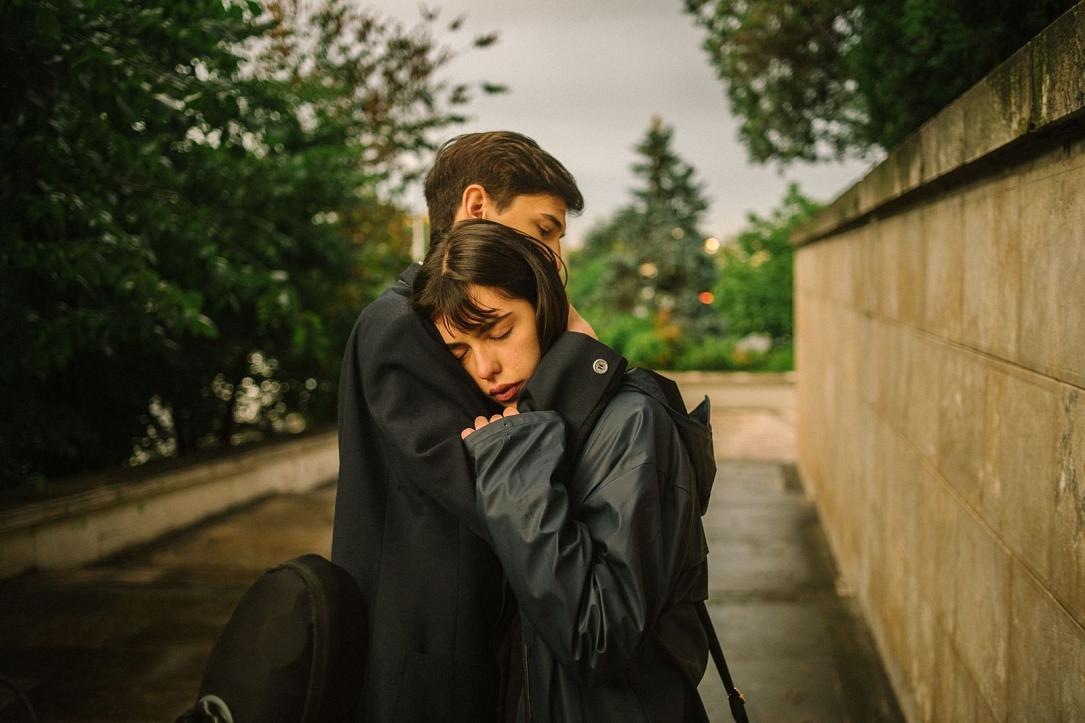
Meanwhile, the constant, close-up attention lavished on the film’s lead is an unusual choice in a story designed to deliver more general socio-historical observation. Yet from the very first shot, as Ana (Mara Bugarin) waits for her boyfriend Sorin (Serban Lazarovici) on a rain-slicked plaza framed with friezes celebrating the nation’s military history, and Panduru’s camera pulls expressionistic coronas of sunflare into the lens, it cues a visual approach far removed from your standard steely, gritty realism.
Ana and Sorin share a tender kiss, but in the very next moment, Ana is in tears. Sorin has just told her of his family’s plans to emigrate to Germany, and does not, to Ana, seem sufficiently anguished about their impending separation. She’s mopey at school that day — newcomer Bugarin is superb at conveying her character’s surly adolescent self-absorption — and declares with a flounce that she will not attend her friend Roxana’s (Mara Vicol) party that night for fear of seeing him. Fatefully, she changes her mind and, against the express wishes of her mother and the gentler pleadings of her father, slips out to Roxana’s, borrows a dress and resolves to lock down Sorin’s affections by any means necessary.
The parent-free soiree is arranged around the transmission of exiled Romanian DJ Cornel Chiriac’s show, Metronom, on illicit youth-culture station Radio Free Europe. And while there is some talk of some letter of support that Ana’s friends are intending to get smuggled out of the country into Chiriac’s hands, that is all background buzz to Ana’s singleminded fixation on her relationship woes. Then, while dancing with a clearly besotted classmate, she spots Sorin arriving, pulls him into a bedroom, and initiates their first sexual intercourse, before spooking her beau with a whispered “I love you” and watching crestfallen as he flees the scene. (That this entire sequence plays out to The Doors’ “Light My Fire” is either a testament to how fast things can happen when you’re that age, or simply a reminder of how very long the instrumental part of that song is.)
In any case, it cues up a brilliant mid-point pivot, as Ana goes for a walk to clear her head of her recent humiliation and returns to a party — and a world — irrevocably changed. The music is off and her friends are standing in a flushed, trembling line as the secret police, who have been tipped off about the letter plan, rifle through the contraband albums and books in Roxana’s apartment. The kids are taken to police detention and forced to write detailed statements about the party, naming names and assigning blame for this tiny, innocuous, largely symbolic but nonetheless illegal act of low-level anti-government protest. Though Ana had the least to do with the letter, and seems among the most politically apathetic of her circle, she proves most resistant to such coercion.
The restraint of Belc’s filmmaking is impressive, especially in the film’s thornier, more fraught second half, when the temptation must have existed to go bigger and more extreme, to punch home points that instead land like paper cuts so subtle you don’t notice till they bleed. A cameo from actor Vlad Ivanov is emblematic of this understatement: His police captain does not raise a hand or even really raise his voice. Instead the well-known New Wave regular projects an affable, reasonable, stern-but-fair image that can snap off like a light the instant his victim tries his patience. This is not a drama of sharp, stabbing theatrics, but of quietly ramping internal tension, as it comes to feel like an entire society’s moral fate hangs in the balance of Ana’s faltering resolve.
What starts as a story about the exquisite pain of first love thus ends in a broader, crueler kind of heartbreak: that experienced by a whole citizenry, who were betrayed, by leaders intent on stealing their individual rights, into becoming complicit in the theft. Understanding without excusing the tiny, tragic ticks and tocks of compromise on which a nationwide culture of suspicion, betrayal and mutual mistrust can be built, “Metronom” is an intelligent, invested homage to this doomed Romanian generation, robbed of the freedoms of adulthood before they’d even got to sample them, unlucky enough to have woken up to life just as the sun went down.
Romanian film review – Teenage rebellion in times of repression: Metronom
03 November 2022
Ioana Moldovan
Metronom is Alexandru Belc’s third feature and first fiction project. Much more ambitious and polished than his documentaries 8th of March and the lovely Cinema, Mon Amour, it stumbles in places, but is also one of the most beautiful films of the year, and definitely one with the best soundtrack.
The latter is thanks to the radio show that gives the film its title. In the late 1960s, Metronom was a very successful music radio show. Cancelled in 1969 after playing, among others, The Beatles' Back in the U.S.S.R. following the invasion of Czechoslovakia, it was relaunched on Radio Free Europe after its legendary host Cornel Chiriac fled to Munich (where he was murdered in 1975). The show is both the trigger of the film's plot and the heart of its loveliest part.
A group of highschool fans write a letter to Chiriac that they intend to send to Germany. The intermediary will be Sorin, who will pass it to a foreign journalist, before leaving the country with this family, much to his girlfriend’s sadness, solid student Ana. When she decides spontaneously, against her mother‘s permission, to join the house party of the more rebellious Roxana, hoping that Sorin will also be there, it all goes downhill. The party is broken by the police who has been informed of the letter, arresting all kids under the accusation of plotting against the state, threatening them with a ruined future unless they name the responsible party. Ana, though the least involved of all, turns out to be the hardest to crack.
Even when threatened separately by a higher officer (Vlad Ivanov in usual scene-stealing mode), she cannot break her own moral principles. As usual, the actor is excellent as a menacing guy playing suave, but as watchable as he is, the scenes with him are also the weakest. Him playing a rotten character has become a cliché, and the whole thing just drags. But Ana's decision is nerve-wrecking to watch, while the ending hinting at it is deceptively suppressed.
Nothing comes close to the extended party scene though, with the young protagonists dancing, talking, laughing, filling the space with joy against Metronom's classic hits. But when Chiriac plays The Doors' Light My Fire, it all really ignites. I was in awe at the film‘s premiere at TIFF and still think this is one of the most wonderful scenes in a Romanian film. Nothing comes close to its wonder afterwards; the drama is much more subdued, a bit too much for its own good.
Read next
30 May 2022
Romanian director Alexandru Belc wins Un Certain Regard prize at 2022 Cannes Film Festival
Despite these missteps Metronom is beautiful, serene, and a moving tribute to youth and (surprising) grit. Mixing politics with coming-of-age is nothing new, but Belc does it very well, also by choosing to look at Communist repression from an era seldom considered; usually it is the 1980s that are shown in their terror. The film premiers on 4 November; make sure to catch it, this is one to watch on a big screen.
By Ioana Moldovan, columnist, ioana.moldovan@romania-insider.com
==


Comments
Post a Comment