[은교] 늙은 할아버지와 17살 여고생의 만남.. 이것은 과연 사랑일까?ㅣ[ 김고은X박해일 ] - YouTube









 I'll continue to support her no matter what.
 #SPREADTHELOVE️️














@냥냥묭묭-i2p4 years ago
너무 슬픈 영화...
==
==
Reviews
Matchstick Men

 Drama
Drama120 minutes ‧ PG-13 ‧ 2003
Roger Ebert
September 12, 2003
4 min read
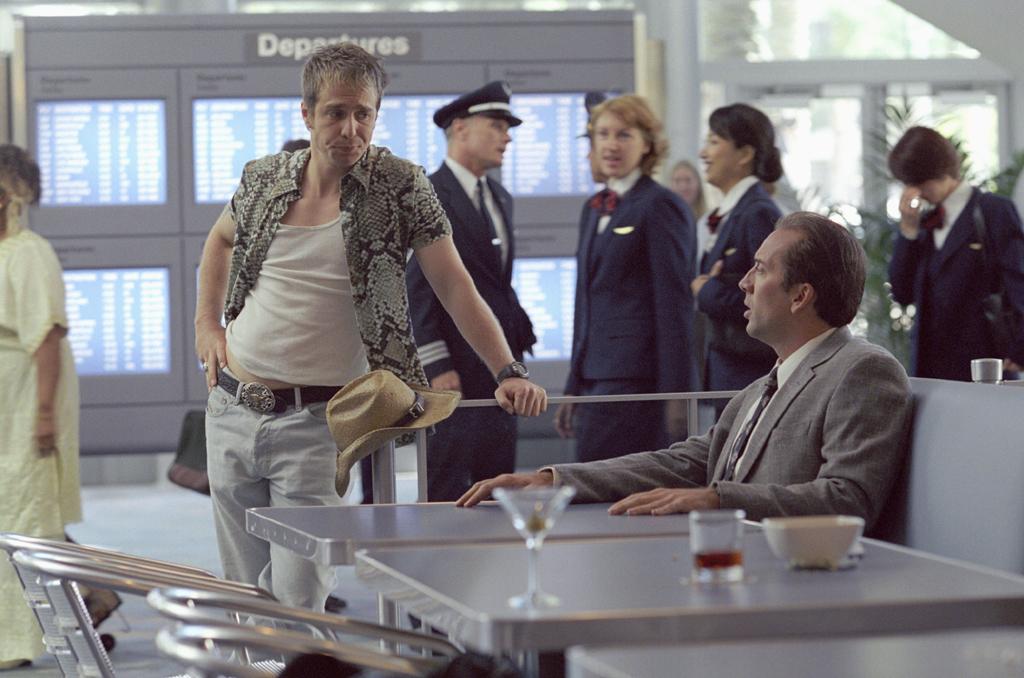
Ridley Scott‘s “Matchstick Men” tells three stories, each one intriguing enough to supply a movie. It is: (1) the story of a crisis in the life of a man crippled by neurotic obsessions; (2) the story of two con men who happen onto a big score, and (3) the story of a man who meets the teenage daughter he never knew he had, and finds himself trying to care for her. The hero of all three stories is Roy (Nicolas Cage), who suffers from obsessive-compulsive disorder, agoraphobia, panic attacks, you name it. His con-man partner is Frank (Sam Rockwell). His daughter is Angela (Alison Lohman), and Roy is so fearful that when he decides to contact her, he persuades his shrink to make the phone call.
I wish that you had seen the movie so we could discuss what a sublime job it does of doing full justice to all three of these stories, which add up to more, or perhaps less, than the sum of their parts. The screenplay for “Matchstick Men” is an achievement of Oscar calibre — so absorbing that whenever it cuts away from “the plot,” there is another, better plot to cut to. Brothers Ted and Nicholas Griffin adapted it from the novel by Eric Garcia. Cage bought the movie rights before it was published, and no wonder, because the character of Roy is one of the great roles of recent years; he’s a nut case, a clever crook and a father who learns to love, all in one. Cage effortlessly plays these three sides to his character, which by their nature would seem to be in conflict.
As the movie opens, Roy and Frank are playing a sophisticated form of the Pigeon Drop, in which victims are convinced they have a tax refund coming, and then visited by Frank and Roy themselves, posing as federal agents who want cooperation in catching the tax frauds. Elegant. Frank keeps wondering when Roy will be ready to pull a really big job, but it’s all Roy can do to get out of bed in the morning.
An open door can cause a panic attack. He goes into spasms of compulsive behavior, and only the pills prescribed by Dr. Klein (Bruce Altman) seem to hold him together at all. When he spills his pills down the drain and Klein’s office is closed, Cage has a scene in a pharmacy that is the equal of his opening moments in “Leaving Las Vegas” as an illustration of man desperately trying to get what he needs before he implodes.
Enter the mark: Frechette (Bruce McGill), a man who might want to turn a profit laundering large sums of British money that Roy and Frank happen to have on hand. The way they bait this trap, spring it, and then move Frechette up to a really large sum has the fascination of any good con. The secret, Roy explains, is that he doesn’t take people’s money: “They give it to me.” The victims always think it’s their own idea. And since they’re breaking the law, who can they complain to? Meanwhile, Dr. Klein learns more about Roy’s early, unhappy marriage, which produced a daughter after Roy left. Would it help to meet this girl, who would now be about 15? It might. After Klein makes the first advance, Roy approaches Angela after school, his tics and jerks and twitches all in demo mode. Angela comes for a “trial weekend,” stays for a while, and eventually becomes a steadying influence for her father. At first Roy is reluctant to tell her about himself, but when he finally does admit he’s not very proud of what he does, that’s the first moment in the movie when he seems calm and even relaxed.
Cage is accused of showboating, but I prefer to think he swings for the fences. Sometimes he strikes out (“Gone in 60 Seconds”), but more often he connects (he took enormous risks in “Leaving Las Vegas,” “Bringing Out the Dead” and “Adaptation“). He has a kind of raging zeal that possesses his characters; what in another actor would be overacting is, with Cage, a kind of fearsome intensity. There’s an Oscar nomination here for him.
Rockwell, Lohman, McGill and Altman are all perfectly cast, which is essential, since they must convince us without the movie making any effort to insist. Lohman in particular is effective; I learn to my astonishment that she’s 24, but here she plays a 15-year-old with all the tentative love and sudden vulnerability that the role requires, when your dad is a whacko confidence man.
Because this is a movie about con men and a con game, there are elements I must not reveal. But let’s talk about the film’s very last scene — the one that begins, “One Year Later.” This is a scene that could have gone terribly wrong, spoiled by being too obvious, sentimental, angry or tricky. Ridley Scott and his players know just how to handle it; they depend on who these characters really are. If you consider what the characters have gone through and they meant to one another, then this scene has a kind of transcendence to it. It doesn’t trash the story or add one more twist just for fun, but looks with dispassionate honesty at what, after all, people must believe who do this sort of thing for a living.
==
Matchstick Men
| Matchstick Men | |
|---|---|
 Theatrical release poster | |
| Directed by | Ridley Scott |
| Screenplay by |
|
| Based on | Matchstick Men by Eric Garcia |
| Produced by | |
| Starring | |
| Cinematography | John Mathieson |
| Edited by | Dody Dorn |
| Music by | Hans Zimmer |
Production companies |
|
| Distributed by | Warner Bros. Pictures |
Release dates |
|
Running time | 116 minutes[1] |
| Countries | United States United Kingdom[2] |
| Language | English |
| Budget | $62 million[3] |
| Box office | $65.6 million[4] |
Matchstick Men is a 2003 black comedy crime film[5] directed by Ridley Scott and based on Eric Garcia's 2002 novel of the same name. The film stars Nicolas Cage, Sam Rockwell, and Alison Lohman. The film premiered on September 2, 2003, at the 60th Venice International Film Festival and was released in the United States on September 12, 2003. It received generally positive reviews and grossed $65 million against its $62 million budget.
Plot
Roy Waller is a con artist from Los Angeles with severe Tourette syndrome and obsessive-compulsive disorder. Alongside his partner and protégé Frank Mercer, Roy runs short cons, selling overpriced water filtration systems to unsuspecting customers. One day, Roy accidentally spills his medication down the sink; he then discovers his doctor has skipped town and begins a cleaning spree in his house that lasts until the following day. Roy subsequently experiences a violent panic attack when Frank visits him. Frank suggests he see a psychiatrist, Dr. Harris Klein.
Klein provides Roy with medication, and in therapy, Roy recalls his past relationship with Heather, his ex-wife who was pregnant during their divorce. At Roy's behest, Klein informs Roy he called Heather, finding out Roy has a 14-year-old daughter, Angela. Roy and Angela meet, and her youthful energy rejuvenates him. Jubilant, he agrees to work with Frank on a long con; their target is Chuck Frechette, an arrogant businessman whom they plan to con using the pigeon drop.
One night, Angela shows up at Roy's house, saying she has had a fight with her mother, deciding to stay for the weekend before returning to school. Exploring his belongings, she causes him to rethink his life, which he mentions during therapy with Klein. Angela returns home late one night, leading to an argument between them. During dinner, Roy admits he is a con artist and reluctantly agrees to teach Angela a con. They go to a local laundromat and con an older woman into believing she has won the lottery, so she shares half of her expected winnings with Angela; however, Roy then forces Angela to return the money.
Roy goes bowling with Angela but is interrupted when Frank reveals that Chuck's flight to the Caymans has been updated to that day instead of Friday as planned. With little time, Roy reluctantly lets Angela distract Chuck midway through the con; however, after the con is finished, Chuck realizes what has happened and chases them into a parking garage before they escape. Roy then discovers Angela was arrested a year earlier and asks her to stop calling him.
Without Angela, Roy's myriad phobias resurface, and during another panic attack, he ultimately learns that the medication given to him by Klein is a placebo. To Frank's disappointment, he proclaims he needs Angela but would have to change his lifestyle. Roy reaches out to Angela, and they reconcile. After returning from dinner one night, they find Chuck waiting for them with a gun alongside a badly beaten Frank. Angela shoots Chuck, and Roy sends her off with Frank into hiding until the matter can be resolved. As Roy prepares to take care of Chuck's body, Chuck suddenly springs to life and knocks Roy unconscious.
Roy awakens in a hospital, where the police inform him that Chuck died from the gunshot and Frank and Angela have disappeared. Klein appears, and Roy gives him the password to his large safety deposit box, ordering him to provide the money to Angela when she is found. Later, Roy awakens to find the "police" have disappeared, his "hospital room" is a freight container on the roof of a parking garage, "Dr. Klein's" office is vacant, and Roy's substantial cash savings have been taken. Frank reveals in a letter that he pulled a long con. Roy drives over to Heather's (whom he hasn't seen in years), looking for Angela. Roy learns the truth: Heather miscarried their child. The young woman he thought was their child was Frank's accomplice.
One year later, Roy is a salesman at a local carpet store, where one day Angela and her boyfriend wander in. Roy confronts Angela—who looks older than when she was conning him—but ultimately forgives her, realizing that he is happier as an honest man. Angela reveals that she did not receive her fair share of the cut from Frank and that it was the only con she ever pulled. She then asks Roy if he would like to know her real name, to which he replies "I know your name." In turn, Angela says "I'll see you, Dad." before departing with her boyfriend. Roy returns home to his new wife, Kathy, who is pregnant with his child.
Cast
- Nicolas Cage as Roy Waller
- Sam Rockwell as Frank Mercer
- Alison Lohman as Angela
- Bruce Altman as Dr. Harris Klein
- Bruce McGill as Chuck Frechette
- Sheila Kelley as Kathy
- Beth Grant as Laundry Lady
- Melora Walters as Heather, Roy's Former Wife (uncredited)[citation needed]
- Jenny O'Hara as Mrs. Schaffer
- Steve Eastin as Mr. Schaffer
- Fran Kranz as Slacker Boyfriend
- Tim Kelleher as Bishop
- Tim Maculan as Pharmacist #2
- Giannina Facio as Bank Teller
- Sonya Eddy as Parking Garage Cashier
- Jim Zulevic as Bartender
Release
Box office
Opening in 2,711 theaters in the United States and Canada, the film's opening weekend gross stood at second place with $13.0 million for a per-theater-average of $4,827; it ultimately lost the number-one position to Once Upon a Time in Mexico. The film eventually grossed $36.9 million domestically, and $65.5 million worldwide.[4]
Critical reception
On the review aggregator website Rotten Tomatoes, 83% of 183 critics' reviews are positive, with an average rating of 7.1/10. The website's consensus reads: "Breezy and well-acted, Matchstick Men focuses more on the characters than on the con."[6] Metacritic, which uses a weighted average, assigned the film a score of 61 out of 100, based on 38 critics, indicating "generally favorable" reviews.[7] Audiences polled by CinemaScore gave the film an average grade of "B" on an A+ to F scale.[8]
Roger Ebert gave the film 4 stars out of 4, describing it as "so absorbing that whenever it cuts away from the plot, there is another, better plot to cut to." He also recommended the film for several Oscar nominations, most notably Nicolas Cage's performance and the film's screenplay.[9] James Berardinelli awarded the film 3½ stars out of 4, praising the film for its "sly, biting sense of humor" and "emotionally satisfying" elements. He also praised the film's acting, and ultimately noted that the film was "worth every cent" of the ticket price and was "the first winner of the fall movie season."[10] Carrie Rickey of The Philadelphia Inquirer praised Lohman's "naturalistic acting" and "unaffected air". She also liked Scott's "mannerist direction", yet had mixed feelings about the film's final "O. Henry surprise", calling it "a twist deserving of Chubby Checker."[11] Stephen Hunter of The Washington Post wrote the film was best enjoyed when "you don't fight it and try not to put too much thought into certain anomalies that crop up along the way. Let it swindle you; it's part of the fun."[12]
References
- "Matchstick Men". British Board of Film Classification. Archived from the original on May 3, 2021.
- "Matchstick Men (2003)". British Film Institute. Archived from the original on May 27, 2016. Retrieved June 23, 2017.
- Robbins, Shawn (June 15, 2012). "Number Crunch: A Look At Ridley Scott's Career". BoxOffice. Archived from the original on January 26, 2015. Retrieved October 28, 2015.
- "Matchstick Men (2003)". Box Office Mojo. Retrieved September 12, 2016.
- "Review: 'Matchstick Men' lights up". CNN. September 11, 2003. Archived from the original on December 4, 2021.
- "Matchstick Men". Rotten Tomatoes. Fandango Media. Retrieved March 7, 2025.
- "Matchstick Men". Metacritic. Fandom, Inc. Retrieved March 16, 2022.
- "Cinemascore". Archived from the original on December 20, 2018.
- Ebert, Roger (September 12, 2003). "Matchstick Men". Rogerebert.suntimes.com. Retrieved June 10, 2013.
- "Review: Matchstick Men". Reelviews.net. Retrieved June 10, 2013.
- Rickey, Carrie (February 29, 2008). "Flimflammery and fatherhood". The Philadelphia Inquirer. Retrieved July 28, 2025.
- Hunter, Stephen (September 12, 2003). "The Heart of a Hustler". The Washington Post. Retrieved July 28, 2025.

==
1
Reply


Comments
Post a Comment