For Sama - Wikipedia 《사마에게》


《사마에게》(아랍어: برای سماء, 영어: For Sama)는 시리아 내전을 취재한 2019년작 다큐멘터리 영화이다. 시리아인 시민기자 와드 알카팁(가명)이 내전 중 알레포에서 벌어진 5년간의 일을 촬영하여 기록한 작품이다. 필름 안에서 와드는 친구이자 의사인 함자와 결혼하여 딸 사마를 낳고, 전장 속에서 딸을 키운다. 그녀는 '우리가 무엇을 위해 싸웠는지 알아주길 바란다. 시리아의 참상은 지나간 역사가 아니라 현재 진행 중'이라고 말했다.[1] 2019년 3월 SXSW에서 공개되었으며, 2019년 칸 영화제에서 최우수 다큐멘터리상을, 제73회 영국 아카데미 영화상 다큐멘터리상을 수상했다.
日本では劇場公開[14]の翌年の2021年(令和3年)4月に、NHK-Eテレのドキュメンタリー番組「ドキュランドへようこそ」で日本語吹き替えの短縮版も放送された[7]。
脚注
- “For Sama”. Hot Docs Canadian International Documentary Festival. 2019年9月16日閲覧。
- “For Sama (2019) - Financial Information”. The Numbers. 2019年12月16日閲覧。
- “For Sama (2019)”. Box Office Mojo. 2019年12月16日閲覧。
- “For Sama”. South by Southwest. 2019年9月16日閲覧。
- “2019 Award Winners”. South by Southwest. 2019年9月16日閲覧。
- 木村菜穂子, 2021
- “「娘は戦場で生まれた」 - ドキュランドへようこそ”. NHK. 2024年11月23日閲覧。 “初回放送日:2021年4月2日”
- “For Sama (2019)”. Rotten Tomatoes. 2019年12月16日閲覧。
- “For Sama”. Metacritic. 2019年12月16日閲覧。
- “« Pour Sama », le massacre des innocents à Alep” (フランス語). (2019年10月8日). ISSN 0242-6056 2019年10月10日閲覧。
- “Cannes 2019 : les documentaires "Pour Sama" et "La cordillère des songes" primés à l'Œil d'or” (フランス語). Franceinfo (2019年5月25日). 2019年10月10日閲覧。
- Stewart Clarke (2019年12月1日). “‘David Copperfield,’ ‘For Sama,’ Renee Zellweger Win at British Independent Film Awards”. Variety. 2019年12月16日閲覧。
- Jeremy Fuster (2019年12月1日). “‘For Sama,’ Renee Zellweger Win Big at British Independent Film Awards”. The Wrap. 2019年12月16日閲覧。
- 真鍋厚 (2020年2月28日). “『娘は戦場で生まれた』の衝撃。前代未聞のドキュメンタリーを貫く「問い」”. CINRA. CINRA, Inc.. 2024年11月23日閲覧。
関連文献
- 安田菜津紀 (2020年3月5日). “人との確かなつながりで、私はどんな武器よりも強くあれる -映画『娘は戦場で生まれた』ワアド監督インタビュー”. Dialogue for People. 特定非営利活動法人Dialogue for People. 2024年11月23日閲覧。
- 木村菜穂子 (2021年11月25日). “「For Sama」というドキュメンタリー映画が描くシリア内戦と「正義とは何か?」という疑問 |中東から贈る千夜一夜物語”. ニューズウィーク日本版. 2024年11月23日閲覧。
For Sama
| For Sama | |
|---|---|
.jpg) | |
| Directed by | |
| Produced by | Waad Al-Kateab |
| Starring |
|
| Cinematography | Waad Al-Kateab |
| Edited by | Chloe Lambourne Simon McMahon |
| Music by | Nainita Desai |
Production companies | PBS Frontline Channel 4 News ITN Productions |
| Distributed by | PBS Distribution (US) Republic Film Distribution (UK) |
Release dates | |
Running time | 100 minutes |
| Countries |
|
| Languages | Syrian Arabic English |
| Box office | US$1.3 million[2][3] |
For Sama (Arabic: من أجل سما, romanized: min ʾajl Samā) is a 2019 documentary film produced and narrated by Waad Al-Kateab, and directed by Waad Al-Kateab and Edward Watts. The film focuses on Waad Al-Kateab's journey as a journalist and rebel in the Syrian uprising. Her husband is Hamza al-Kateab, one of the few doctors left in Aleppo, and they raise their daughter Sama Al-Kateab during the Syrian Civil War.
The film had its world premiere at the South by Southwest festival on March 11, 2019,[4] where it won the Documentary Feature Competition's Grand Jury and Audience Awards.[5]
For Sama made history when it was nominated in four categories in the BAFTA awards, making it the most nominated documentary ever.[6] It was nominated for the Academy Award for Best Documentary Feature at the 92nd Academy Awards.[7]
Premise
The film shows Waad al-Kateab's life through five years in Aleppo, Syria before and during The Battle of Aleppo. An economics student at the University of Aleppo when the uprising began in 2011, we watch as she falls in love, gives birth to her first daughter Sama and navigates motherhood all while the conflict begins to engulf the city. She and her husband, a doctor at one of the few remaining hospitals in the city, face an agonising decision to flee to safety or stay behind to help the innocent victims of war.
Cast
- Hamza al-Kateab
- Sama al-Kateab
- Waad al-Kateab
Reception
Critical response
On the review aggregator Rotten Tomatoes, the film holds an approval rating of 98% based on 99 reviews, with an average rating of 9/10. The website's critical consensus reads, "As intimate as it is heartbreakingly resonant, For Sama powerfully distills the difficult choices faced by citizens of war-torn regions."[8] Metacritic, which uses a weighted average, assigned the film a score of 89 out of 100, based on 18 critics, indicating "universal acclaim".[9]
Ian Freer of Empire, wrote "It will break your heart", and he further added, "For Sama powerfully mixes the personal and the political to thought-provoking, emotional ends. The result is one of the best documentaries of 2019".[10] David Jenkins of the Little White Lies wrote, "This tough but vital documentary depicts the savage bombardment of Aleppo from a female perspective".[11] Jordan Mintzer of The Hollywood Reporter wrote, "[For Sama] The result is a series of deeply powerful images showing the human casualties of a war that most of us witnessed from our TV sets or computer screens, but that al-Kateab and her husband lived on a daily basis for many years".[12] Guy Lodge of the Variety wrote, "This ragged, remarkable act of cinematic witnessing sees a young woman finding her voice – as an activist, as an artist and as a parent – above the crashing, whistling din of warfare. Amid a surfeit of devastating reports from the ruins, it's one we haven't yet heard".[13]
Awards and nominations
For Sama made history by becoming the BAFTA's most-nominated feature documentary. The British Academy of Film and Television Arts announced the film has been nominated in four categories, Outstanding debut by a British writer, director or producer; Outstanding British film; Best film not in the English language and Best documentary.[14][15] For Sama won multiple awards at the British Independent Film Awards in December 2019 including: best British independent film, best documentary, best director and best editing.[16][17]
For Sama was granted "L'oeil d'or", the best documentary movie award in Cannes Film Festival in 2019.[18][19] The documentary was nominated for an Oscar at the 92nd Academy Awards in the Documentary Feature category.[20][21][22]
Social impact
As For Sama got a lot of international attention, Waad Al-Kateab launched an advocacy campaign in the name of Action for Sama to advocate for the civilians of Syria. Her campaign attracted the attention of some of the most internationally known actors and actresses.
People's emotional reaction to the film is what she hopes will prompt them to action, but for the decision makers and those who have power, she expects more than just emotions after seeing her film. "Many people came to me crying and said they are so sorry that they let that happen. [...] It shows you how many people care. But on the level of decision makers [...] We have tried so hard to push for action, do something, to make sure these things don't continue to happen. [...] If you are in a position where you can change something, I don't want your tears, I want you to do something, you can make a difference," says Waad Al Kateab quietly but firmly.[35]
See also
- Battle of Aleppo (2012–2016)
- Media coverage of the Syrian Civil War
- The Cave (2019 Syrian film)
- Notturno (film)
References
- "For Sama". Hot Docs Canadian International Documentary Festival. Retrieved 16 September 2019.
- "For Sama (2019) - Financial Information". The Numbers.
- "For Sama (2019)". Box Office Mojo.
- "For Sama". South by Southwest. Retrieved 16 September 2019.
- "2019 Award Winners". South by Southwest. Retrieved 16 September 2019.
- "Syrian war documentary "For Sama" makes history with 4 British film award nominations". Arab News. 2020-01-07. Retrieved 2020-01-07.
- Husted, Anne (13 January 2020). "For Sama Receives Academy Award® Nomination for Best Documentary Feature". FRONTLINE. PBS. Retrieved 13 January 2020.
- "For Sama (2019)". Rotten Tomatoes. Fandango. Retrieved 10 October 2021.
- "For Sama". Metacritic. Retrieved 24 May 2020.
- "For Sama". Empire. 2019-09-09. Retrieved 2019-09-20.
- "For Sama review – A film that must be seen to be believed". Little White Lies. Retrieved 2019-09-20.
- "'For Sama': Film Review | SXSW 2019". The Hollywood Reporter. 12 March 2019. Retrieved 2019-09-20.
- Lodge, Guy (2019-05-01). "Film Review: 'For Sama'". Variety. Retrieved 2019-09-20.
- Wiseman, Andreas (2020-01-07). "Syrian War Film 'For Sama' Scores Record Number Of BAFTA Nominations For A Documentary". Deadline. Retrieved 2020-01-07.
- "Syrian war documentary "For Sama" makes history with 4 British film award nominations". Arab News. 2020-01-07. Retrieved 2020-01-07.
- Stewart Clarke (December 1, 2019). "'David Copperfield,' 'For Sama,' Renee Zellweger Win at British Independent Film Awards". Variety.
- Jeremy Fuster (December 1, 2019). "'For Sama,' Renee Zellweger Win Big at British Independent Film Awards". The Wrap.
- "" Pour Sama ", le massacre des innocents à Alep". La Croix (in French). 2019-10-08. ISSN 0242-6056. Retrieved 2019-10-10.
- "Cannes 2019 : les documentaires "Pour Sama" et "La cordillère des songes" primés à l'Œil d'or". Franceinfo (in French). 2019-05-25. Retrieved 2019-10-10.
- "Academy Unveils 2020 Oscar Shortlists". The Hollywood Reporter. 16 December 2019.
- "Oscar nominations 2020: 'Joker' leads with 11; Greta Gerwig snubbed for best director; complete list of nominees". The Washington Post. 13 January 2020. Retrieved 13 January 2020.
- "Oscars 2020 nominations: Full list of nominees including Joker, Little Women and Jojo Rabbit". Telegraph. January 13, 2020.
- 2020 Oscar Nominations List: Academy Award Nominees – Variety
- "American Factory" wins Best Documentary Feature-Oscars on YouTube
- "The 92nd Academy Awards | 2020". Oscars.org. Academy of Motion Picture Arts and Sciences. February 9, 2020. Retrieved February 10, 2020.
- "2020 års Guldbaggenomineringar!". Guldbaggen.se. 17 December 2020. Retrieved 25 January 2021.
- Adelai, Amina; Farran-Lee, Lydia (25 January 2021). "Charter och Spring Uje spring tog hem de tunga priserna". SVT (in Swedish). Retrieved 25 January 2021.
- Jennie Punter, "‘We Will Stand Up,’ ‘Hope Frozen’ Take Top Prizes at Hot Docs". Variety, May 4, 2019.
- Schneider, Michael (June 10, 2020). "'Stranger Things,' 'When They See Us,' 'Watchmen' Among This Year's Peabody Award Winners". Variety. Retrieved June 10, 2020.
- Abbatescianni, Davide (9 February 2021). "Another Round triumphs at the 2021 Robert Awards". Cineuropa. Retrieved 23 August 2021.
- "Nominations for the Robert Awards 2021 announced". Danish Film Institute. 6 January 2021. Retrieved 23 August 2021.
- Cho, Minhee (June 4, 2020). "Announcing the Winners of the 2020 Robert F. Kennedy Book and Journalism Awards". APNews. Retrieved June 8, 2020.
- "2020 INTERNATIONAL EMMY® WINNERS ANNOUNCED LIVE AT CEREMONY HELD FROM NEW YORK CITY". International Academy of Television Arts and Sciences. Retrieved November 23, 2020.
- "For Sama awards - IMDB". IMDb.
- Waad, Al Kateeb (3 July 2020). "Syrian filmmaker Waad Al Kateab: 'I don't want your tears. I want action'". Infomigrants.
Further reading
- Kate Brannen (November 19, 2019). "To watch "For Sama" is to bear witness". Just Security.
External links
- 2019 films
- Citizen journalism
- Documentary films about the Syrian civil war
- Documentary films about women in war
- Documentary films about children in war
- 2010s pregnancy films
- Best Foreign Film Guldbagge Award winners
- 2019 documentary films
- Documentary films about pregnancy
- European Film Awards winners (films)
- Films set in Aleppo
- Arabic-language American films
Plot Explained
Spoilers guaranteed!
BackHome
Movies
For Sama
Summary
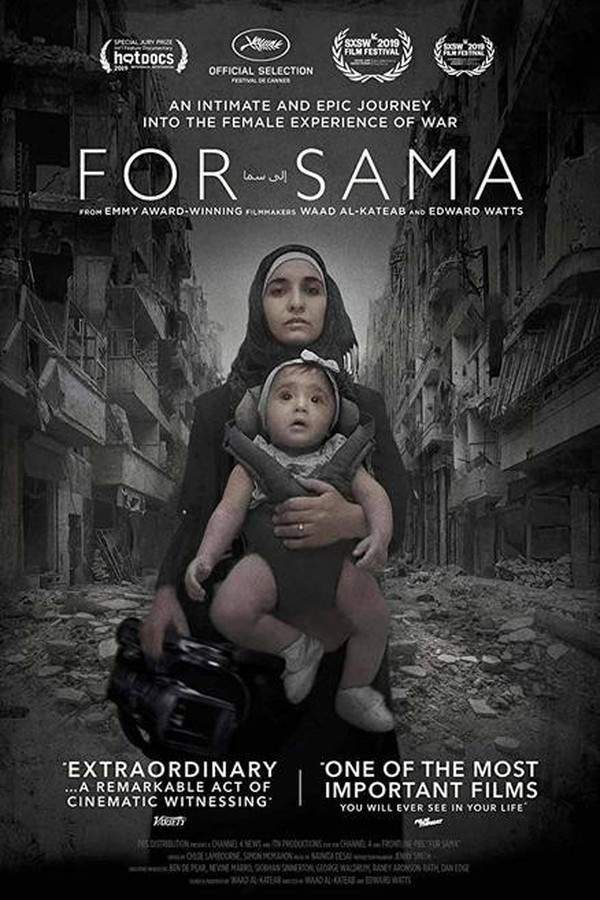
For Sama
Year: 2019
Runtime: 100 min
Language: Arabic
Directors: Edward Watts, Waad Al-KhateabEcho Score: 82
Documentary
Amidst the devastation of Aleppo, Syria, a young mother, Waad al-Kateab, documents five years of civil war in a deeply personal love letter to her daughter. Her intimate chronicle captures moments of joy and profound sacrifice, offering a harrowing look at the resilience of women in wartime. Faced with impossible choices, she films the struggle to protect her child and maintain her convictions, revealing the heart-wrenching realities of a nation torn apart.
Dark
Bittersweet ending
Emotionally heavy
High intensity
Mixed pacing
Simple story
Plot SummaryMovie TimelineCharacters, Setting & ThemeSpoiler-Free SummaryMovie Info
Warning: spoilers below!
Haven’t seen For Sama yet? This summary contains major spoilers. Bookmark the page, watch the movie, and come back for the full breakdown. If you're ready, scroll on and relive the story!
For Sama (2019) – Full Plot Summary & Ending Explained
Read the complete plot breakdown of For Sama (2019), including all key story events, major twists, and the ending explained in detail. Discover what really happened, and what it all means.
FOR SAMA is a deeply moving documentary presented as a heartfelt letter from Waad Al-Khateab, a 26-year-old mother from Syria, to her daughter, Sama. This poignant message is recorded during the harrowing final days of the battle for Aleppo. Living alongside Sama’s father, Hamza Al-Khateab, who works as a doctor in the last operational hospital within the beleaguered city, Waad faces the constant threat of death as their neighborhood is relentlessly bombarded by both the Syrian regime and the Russian air force. Fearing for their lives, Waad creates this filmed narrative, a crucial account for her one-year-old daughter to understand her parents’ journey and the reasons behind their relentless fight for freedom.
Waad’s narrative begins back in 2012, during her time as a marketing student at Aleppo University. Amid protests against the tyrannical rule of Bashar al-Assad, she becomes one of the early advocates for change. Armed with her camera, she documents the initial waves of hope that swept through the demonstrators. It is during this chaos that she meets Hamza Al-Khateab, a young medic. Together with their close friends, they persist in their pursuit of freedom, undeterred even as violence escalates and envelops their city.
The couple faces unthinkable dangers, navigating around snipers, airstrikes, and the horrific impact of barrel bombs, all of which they courageously capture on film. In a moment of love during adversity, Hamza proposes, and soon after they marry and move into their first home. Not long after, the couple is expecting a child—an experience that, although universally recognized, unfolds against the backdrop of a grim war.
The situation intensifies with the Russian intervention in September 2015, which exacerbates the conflict. Despite the pervasive fear, Waad and Hamza choose to remain resolute, fighting for their future and for that of their newborn daughter, Sama, who arrives on January 1, 2016, bringing with her a glimmer of hope amidst overwhelming darkness.
Sama’s early life consists of witnessing the turmoil as the battle for Aleppo reaches its zenith, filled with nightmarish atrocities from the regime aimed at annihilating the rebels. The couple’s world is shrouded in violence; Hamza’s hospital is repeatedly bombed, and they endure sieges and chemical attacks. Despite these horrors, the first year of Sama’s life is interspersed with moments of joy and laughter, as Waad and Hamza embrace the blessings of parenthood, drawing strength from their little girl.
Eventually, systemic violence forces them into exile. In a heartrending farewell, the family packs their belongings, shedding tears for the city that held their dreams of freedom, now shattered. Yet, they carry Sama with them—an enduring beacon of love and hope, a testament that the brutality of tyrants cannot extinguish the spirit of resilience.
FOR SAMA is an important film produced by Channel 4 News and ITN Productions for Channel 4 and FRONTLINE PBS. The filmmakers express a strong stance against labeling the conflict in Syria as a “civil war,” emphasizing the significant influence and intervention of external forces, particularly Russia, Iran, and Hezbollah, in suppressing the popular uprising.
Last Updated: November 16, 2024 at 14:27
For Sama (2019) Plot Questions Answered – Summary FAQ
Explore frequently asked questions about For Sama (2019) with spoiler-rich answers covering the full plot summary, major story beats, character motivations, hidden details, and ending meaning. This movie summary FAQ helps explain confusing scenes, plot twists, and narrative decisions in clear, searchable detail.
Q1
Why did Waad decide to stay in Aleppo despite the constant danger?
A.
Waad stayed in Aleppo because she believed in the protest movement against Bashar al-Assad's regime and wanted to document the truth. She felt leaving would mean abandoning her convictions and the cause for freedom she had fought for since 2012. Her commitment to bearing witness to the war and documenting it for her daughter Sama drove her to remain in the dangerous city.
Waad's decision to document the protests from the very beginning in 2012 established her commitment to staying and recording the events.
waad al-kateabaleppostayingprotestsdocumentation
Q2
Why did Hamza continue working at the hospital even after it was bombed?
A.
Hamza continued working at the hospital because it was the last operational medical facility in Aleppo, and people desperately needed care. As a doctor, he felt a profound responsibility to save lives despite the constant threat of targeted bombings. His dedication to his patients and his belief that leaving would mean abandoning those who relied on him kept him at the hospital.
From the moment Hamza was introduced as a medic helping the injured during protests, his commitment to medical work was established.
hamza al-kateabhospitaldoctorbombingmedical work
Q3
Why did Waad and Hamza decide to have a child during such dangerous times?
A.
Waad and Hamza decided to have Sama because they wanted to preserve hope and life in the midst of destruction. Despite the war, they believed creating a family was an act of resistance against the regime's violence. Sama represented their future and their refusal to let the war take everything from them.
The couple's proposal and marriage in 2014 showed their commitment to building a life together despite the chaos around them.
samababychildpregnancyhopebirth
Q4
Why did Waad and Hamza finally decide to leave Aleppo in 2016?
A.
They decided to leave when systemic violence became unbearable and the bombardment intensified to the point where survival was nearly impossible. The constant barrel bombs, chemical attacks, and destruction of their hospital made staying unsustainable. They chose exile to protect their daughter Sama and give her a chance at life.
The escalating Russian intervention in September 2015 marked a turning point that made the situation increasingly untenable.
exileleavingevacuationaleppo2016safety
Q5
How did the Russian intervention in 2015 affect the situation in Aleppo?
A.
The Russian intervention in September 2015 significantly escalated the conflict by providing air support to the Syrian regime. This led to intensified bombardment of rebel-held areas including Aleppo. The added military power made the city even more dangerous and accelerated the siege that eventually forced civilians to flee.
The timeline notes that Russian intervention escalated violence, directly impacting the family's decision-making.
russiaintervention2015air strikesbombing escalation
Q6
Why is the film presented as a letter from Waad to her daughter Sama?
A.
Waad framed the documentary as a letter to explain to Sama why her parents made the choices they did. It allows Sama to understand the reasons behind staying, fighting, and eventually leaving. The letter format creates an intimate explanation of the family's journey and the historical events they lived through.
The entire narrative is structured around this maternal explanation, making it the foundational conceit of the film.
lettersamaexplanationdaughterdocumentary format
Q7
What happened to the hospital where Hamza worked?
A.
Hamza's hospital, the last operational medical facility in Aleppo, was repeatedly targeted and bombed. These attacks destroyed much of the infrastructure but the staff continued operating despite the danger. The bombings were part of the regime's strategy to eliminate care in rebel-held areas.
hospitalbombinghamzamedical facilitydestruction
Q8
Why does the film reject calling the conflict a civil war?
A.
The filmmakers reject the term civil war because it obscures the role of external forces. They emphasize that Russia, Iran, and Hezbollah actively intervened to suppress the uprising. Using civil war implies an internal conflict rather than one involving significant foreign military intervention.
Throughout the film, Waad documents the impact of external forces rather than purely internal Syrian dynamics.
civil warsyriarussiairanhezbollahexternal intervention
Q9
Why did Waad start documenting the protests in 2012?
A.
Waad started documenting the protests because she wanted to capture the historical moment and bear witness to the popular uprising against Assad. As someone who believed in the protest movement, she used her camera to record the hope and demands of demonstrators, creating a personal archive of the early days of resistance.
Her background as a marketing student with access to a camera positioned her uniquely to document events.
protestsdocumentation2012aleppofilmingevidence
Q10
What does Sama symbolize in the film?
A.
Sama represents hope, resilience, and the future that Waad and Hamza were fighting for. Born on January 1, 2016, she embodies life continuing despite destruction. When the family is forced into exile, Sama becomes the symbol they carry with them, proof that love and hope cannot be destroyed by tyrants.
The title of the film itself centers on Sama, making her the emotional anchor of the entire narrative.
samahopesymboldaughterfutureresilience
Q11
What makes For Sama historically significant?
A.
For Sama is significant because it provides intimate, firsthand documentation of the siege of Aleppo from within the city. It captures rare footage of civilian life, protests, and hospital conditions that were otherwise inaccessible to international media. The film serves as both a personal family record and a historical document of the Syrian conflict.
The producers include Channel 4 News and ITN Productions, lending the documentary credibility and historical weight.
historical significancedocumentationalepposyriafirsthand account
Q12
What was the central moral dilemma Waad and Hamza faced throughout the film?
A.
The central dilemma was whether to stay and fight for their homeland or leave to protect their daughter. Staying meant preserving their cause and documenting the truth but risking death. Leaving meant survival but abandoning their city and dreams of freedom. This impossible choice defined their journey throughout the five years of filming.
This tension between personal survival and political commitment runs from the early protest days through their final departure.
moral dilemmastayleavesurvivalchoicefreedom
==
==
For Sama: A story of hope and horror in the Syrian Civil War
0 Comments
October 19, 2024 at 1:49 pm

(L-R) Hamza al-Kateab, Sama, Syrian filmmaker Waad al-Kateab and British filmmaker Edward Watts pose with their awards for a Documentary for ‘For Sama’ at the BAFTA British Academy Film Awards at the Royal Albert Hall in London on February 2, 2020. (Photo by Adrian DENNIS / AFP) (Photo by ADRIAN DENNIS/AFP via Getty Images)
by Yilmaz Acar
ylmzacar
56Shares


For Sama (إلى سما) is a poignant documentary about the Syrian Civil War, produced and narrated by Waad Al-Khateab and co-directed by Edward Watts. Focusing on the life of Al-Kateab, her husband Dr Hamzah and their daughter, Sama, the film offers an intimate and harrowing perspective of the Syrian Civil War. This 96-minute film is crafted from 500 hours of raw, relentless frontline footage recorded with the amateur camera of citizen journalist and activist Waad Al-Kateab. Filmed across various locations in East Aleppo, the documentary reflects the harsh reality of the Battle of Aleppo from 2012 to 2016, a brutal, four-year stalemate that ultimately culminated in the fall of rebel-held Aleppo to the Bashar Al-Assad regime. It is a firsthand account of the female experience of war, perfectly encapsulating a mixture of horror and hope with powerful storytelling. For Sama notably avoids political and ideological narratives, opting instead for a humanitarian lens to portray the crisis. The documentary narrates the struggle of the resilient people during the Syrian Civil War and is dedicated to Al-Kateab’s baby daughter, Sama, who was born amidst the ruins of war-torn Aleppo. The story of Sama, who became her parents’ beacon of hope for enduring the conflict, is representative of the stories of Syrian children of the war.
At the outset of the film, Waad is a senior economics student at the University of Aleppo in 2011, during the early stages of the Syrian revolution as part of the broader Arab Spring. The word “freedom”, written on the university wall in Arabic, Kurdish and English, actually reflects the reasons why these peaceful protests began and what they aimed to achieve. The protestors took to the streets demanding justice, freedom, dignity and honour. Thus, it is also referred to as the “Syrian Revolution of Dignity”. This “peaceful revolution”, as echoed in the chants of the University of Aleppo students, was a nonviolent uprising against the corruption, injustice and oppression of the Assad regime. As the film progresses, we follow Waad’s journey as she falls in love with Hamzah, marries him and gives birth to their daughter, Sama, while managing motherhood during the intensifying conflict. Her husband, Hamzah, was both a political activist and a doctor, serving as part of the first aid team that aided those injured in the protests at one of the city’s last standing hospitals. Alongside her husband, they confront a harrowing dilemma of fleeing for safety or staying in chaos to help war victims and continue to fight for freedom. Ultimately, the Al-Kateab family makes the courageous choice to stay.
REVIEW: Exposing the Zionist settler-colonial mindset: A review of Holy Redemption
Horror
The film shifts chronologically back and forth, yet its most consistent and prominent theme is violence and fear, emotions that are most intensely highlighted in the scenes set inside the hospital, particularly evident in the eyes of the kids crying and screaming on the blood-soaked floors. The scenes in the hospital provide an opportunity to observe from the very heart of chaos, where life and death intertwine at every moment. Religion serves as a significant source of resilience and strength, aiding individuals in enduring the conflict through frequent invocations of Allah. The sorrow and trauma experienced by parents and children in the conflict zone was particularly heart-wrenching, exemplified by two young siblings who, in utmost terror, brought their brother’s lifeless body to Hamzah’s makeshift hospital. The moment their mother, in deep anguish, hugged and carried the lifeless body of her child reminded me of the Palestinian father who carried his deceased children in a pocket during the ongoing Israeli genocide in Gaza.
Hope
The path to freedom has always been fraught with danger, as is painfully evident in the film. This reality is exemplified through the experiences of the Al-Kateab family and other protestors who initially harboured optimistic aspirations of overthrowing the Assad regime to attain freedom. Hope, a central theme in the documentary, endows people with the necessary resilience to endure horrific circumstances. The marriage of Waad and Hamzah, their decision to have a baby and raise her amidst the turmoil, planting trees in their garden, rebuilding the hospital destroyed by a Russian airstrike and, most importantly, continually dreaming of a better future for their daughter Sama, all reflect this enduring hope and optimism. Sama symbolises their hope for survival amidst the conflict and their profound fear of losing her. This sentiment of optimism is further observed in the lives of the Al-Kateab family’s close friends and neighbour, Afraa and her husband Salem, along with their three children, who maintain a positive outlook despite the siege. Furthermore, the willingness of Afraa’s eldest son to stay in Aleppo despite the bombardment, coupled with his dream of becoming an architect to rebuild the city, demonstrates that this hope extends to even the youngest members of the opposition. However, the story, initially marked by hope and resilience, culminates tragically with Aleppo, the last significant rebel stronghold, succumbing to the Assad regime.
One scene in particular stands out for its profound emotional impact: a nine-month pregnant woman, grievously wounded by a piece of shrapnel lodged in her abdomen, undergoes an emergency caesarean section. Initially, it appeared that the newborn had not survived, showing no signs of life. However, through the determined efforts of the medical team employing cardiopulmonary resuscitation, the infant miraculously begins to breathe and cry. This moment of sudden transition from despair to joy brought me to tears of happiness, as both the mother and her baby ultimately survived. This episode serves as a powerful testament to the dedication and resilience of Hamzah, along with his thirty-two doctor colleagues who chose to remain in East Aleppo.
READ: Israeli air strike targets three cars in Syria’s Homs, state news agency says
Human rights violations and the brutality of the Assad regime
For Sama stands out as an insightful documentary on the Syrian Civil War, shedding light on the widespread human rights violations, the brutality of the Assad regime and the stark failure of the international community to address the resulting humanitarian crises. The Assad regime, in its desperate bid to maintain control and stay in power, escalated its violence, particularly during the fall of East Aleppo, which marked a turning point in the Syrian Civil War and led to severe human rights abuses aimed at breaking the resilience of the civilian population. The discovery of massacred civilians’ dead bodies in rivers, with forensic examinations revealing clear signs of torture, executions by gunshot to the head and the use of chlorine gas causing children to cough and gasp for air, are evidence of human rights violations documented in the film. Tactics such as indiscriminate aerial strikes, the use of barrel bombs targeting rescue workers and hospitals, the obstruction of humanitarian aid and imposing sieges, along with the forced displacement of millions, large-scale devastation and the use of chemical weapons, all constitute war crimes. Despite these clear violations of human rights and international law, the international community has largely failed to prevent this humanitarian catastrophe. Syria, under the brutal and despotic rule of Al-Assad and his single-party dictatorship, exemplifies the extreme measures such regimes will take to retain power, often at the expense of the safety of their own people.
Failure of the opposition and resistance
Despite initial optimism and public participation, the Syrian resistance ultimately failed to overthrow Assad. The regime’s violent crackdown swiftly crushed the protests, leading to immense tragedy for millions. Moreover, the lack of unity among opposition forces and the emergence of various extremist factions significantly weakened the opposition, reinforcing the conventional wisdom that there can be no victory without unity and solidarity. The diminishing government control created a power vacuum that various terrorist groups filled, leaving civilians caught in the crossfire. Ultimately, Russia’s air support and Iran’s ground support for the Assad regime, particularly through the Shia militias, along with the US shifting its support from moderate opposition groups, including the Free Syrian Army, to the YPG-led Syrian Democratic Forces, culminated in the failure of the opposition.
For Sama is a heart-wrenching documentary that exposes the ongoing humanitarian crisis of the Syrian Civil War, one of the most significant and enduring conflicts in the Middle East in the 21st century, continuing to this day on a lesser scale. As a resident of Mardin living near the Syrian border who has indirectly observed the devastating effects of the Syrian Civil War, the documentary deeply affected me. Regrettably, we continue to witness similar tragedies unfolding in the Middle East, especially in Gaza, where many others, like Sama, are born into conflict. For Sama has the potential to significantly enhance social awareness about the ongoing humanitarian crisis in Syria, combat the rise of racism towards Syrians in neighbouring countries and provide a compelling explanation for why Syrians had to flee their homeland.
READ: Syria film ‘For Sama’ wins BAFTA award
==
ヨーロッパ
北米
中南米
中近東・アフリカ
ブロガー一覧
TOP
中近東・アフリカ
「For Sama」というドキュメンタリ…

中東・アフリカから贈る千夜一夜物語木村菜穂子|トルコ/エジプト/ケニア
2021/11/25
「For Sama」というドキュメンタリー映画が描くシリア内戦と「正義とは何か?」という疑問
TW
FB
 筆者撮影 ‐ 内戦が起きる前 2010 年のアレッポ市内。
「For Sama」は、ジャーナリストを志望していたシリア人女性によって撮影されたドキュメンタリー映画です。この女性と医師である夫とのアレッポでの日常が描かれています。とはいえ、映画で描かれているアレッポの「日常」は戦火での日常です。
邦題は「娘は戦場で生まれた」。2019 年のカンヌ国際映画祭最優秀ドキュメンタリー賞を受賞した作品ですから、ご覧になった方もおられるかもしれません。カンヌだけではなく、その他さまざまな賞を獲得しました(https://www.forsamafilm.com/)。ぜひ観ていただきたい作品です。
「For Sama」 という映画ができたいきさつ
カメラを回したのはワアド・アル カティーブ。2011 年に「アラブの春」が始まったころ、アレッポの大学の女学生でした。このドキュメンタリーでは、2012 年から 2016 年にかけて反政府軍 (反体制派) の拠点となっていた東アレッポが政府軍によって徐々に制圧されてゆく中で、人々がどのような日常を送っていたかを反体制派の視点で描きだしています。とはいえ、戦闘のシーンはほとんどありません。ごく普通の人々が戦火でどのように生きていたのかだけが描かれています。
戦場となったアレッポ市内 (の東側) を撮影している段階では、これがこのようなドキュメンタリー映画の形でまとめられることは想像していなかったと思います。ですから映し出されるのは演技ではありません。この女性ワアドは医師であったハムザと戦火で結婚し、Sama という女の子を産みます。戦火で生まれた我が子のために、故郷であるアレッポを我が子に知ってほしいという気持ちから 「Sama のため (For Sama)」にカメラを回し続けました。描かれているのは常に死と隣り合わせの日常です。
ちなみに「Sama」とはアラビア語で「空」という意味です。戦火で生まれた子が Sama と名付けられたのは、見上げる空が空爆や空軍などのない空であってほしい、太陽と雲がある空、鳥がいる平和な空であってほしいという気持ちから。
 iStock - 空
映画では、戦争で人々が傷つき死んでいく様子が赤裸々に描き出されています。撮影の舞台のほとんどが夫の勤務する病院 (野戦病院) です。爆撃で傷ついて運び入れられてくる人々、すでに死んでいる子供たち、その子供たちの死を受け入れられない親たち...つくり話ではない事実のみが淡々と映し出されているので、その悲惨さが伝わってきます。
例えば個人的に心に残った場面があります。爆撃を受けた 5 歳くらいの男の子が従兄に抱きかかえられて病院に運び込まれます。その子はもうすでに息絶えていました。運び込んだ従兄も年は 8 歳か 9 歳くらい。ワアドさんが「この子の両親は?」と尋ねると、その男の子は「よく知らない。爆撃ですでに死んでたと思う」と答えます。その時ワアドさんはこの亡くなった少年の母親に嫉妬したと語っています。我が子の死を見ることなく先に死んだ彼女を母親としてうらやましいと思ったのです。
カメラを回し続けた女性ワアドは、2018 年に夫と子供たちと共に英国に難民として渡ります。現在彼女はジャーナリスト・映画製作者・活動家として活動しています。
戦争の現実を目にして心に沸く疑問「正義とは?」
こうした戦争の現実を目にすると「正義とは?」と問いかけずにはいられません。シリア内戦の一番簡単な説明として紹介されるのは、反体制派 VS 現アサド政権という構図。これによると、反体制派から見たアサド政権は「悪」、あるいはアサド政権から見た反体制派は「悪」。片方が「悪」なら、もう片方は「正義」のはず。しかし、実際には戦争に正義などはないように思えます。なお、筆者は中東に住み、シリア人の多くから話を聞くことで今回の記事の執筆に至りましたが、政治に関してはあくまで中立でどちらの側につくこともありません。
シリア内戦の構図は単純に「反体制派 VS 現アサド政権」だったのか?
このドキュメンタリーは、反体制派側の視点で描かれています。とはいえ忘れてはならないのは、シリア人のすべてが反体制派であるわけではないということ。現政権支持者ももちろんいます。ですから、この映画を観る方には、これがシリア内戦の全体像ではなく一部であることを頭に置いていただきたいと思います。私自身、このドキュメンタリーはとても貴重だと思いますし、シリア人としての、母としての、そして妻としてのワアドさんの勇気に敬服します。ただし忘れてはならないのは、シリア内戦は反政府派 VS 現政権という単純な構図ではないという点です。
なぜなら、反体制派を「反体制派」というカテゴリでひとくくりにできないのが現実だからです。カメラを回し続けたシリア女性ワアド・アル カーティブと医師である夫、その仲間たちは純粋に国の改革を願っていた「正統派」の「反体制派」であり、戦いに加わることはなく、アレッポ市内を離れることに最後まで抵抗したごく普通の人々でした。しかしシリアでは、名ばかりの「反体制派」がたくさん出没していました。つまり実際は宗教グループや組織の利権ごとに分裂し、大義も大志も何も持っていないグループです。こうしたグループの場合、犯罪的な行動が目立ちました。
 iStock - アレッポ市内
実のところ、シリア内戦は早い段階で体制支持者 VS 反体制派という構図ではなくなっていました。情報操作がなされており、だれがだれに敵対しているのか、だれがだれに対して戦っているのかほとんどの人は分かっていなかったのではないかと思います。
もちろん、「アラブの春」が始まったころは、確かに現アサド政権に対してデモが行われていました。そしてこの映画の制作者ワアド女史のように、体制の改革を純粋に訴えていた熱い思いを持つシリア人たちがたくさんいました。でもごく早い段階からシリアでは情報が交錯しはじめ、熱い思いを持つ民衆のもともとの意図に反して、反体制派と政府との純粋な戦いなのかさえ途中から分かりなくなりました。この点に関しては、2011年5月5日に書いた筆者のブログ記事で扱っています。
実際に起きていたこと (全てではないにしても) は、政府の機能が停止していることに乗じた宗教間の争い。それから、無政府状態に乗じた悪質な犯罪またはテロ。それを政府の仕業だ、反体制派の仕業だとなすり合いをしている状態でした。
「政府の仕業だ」ということで諸外国の協力を得ようとして反体制派が虐殺をおこなっている可能性も十分にありました。あるいは、反体制派にも政府支持派にも全く関係のない、単なる宗教間の憎しみまたは過激化した組織のテロというケースもあったかと思います。またシリア人の中には、この内戦はシリアという国土で繰り広げられた米ロによる代理戦争だったという人たちもいます。
真実は、張本人たちと神のみぞ知る世界...。しかしこのように、シリア内戦は宗教的・政治的・民族的対立が加わり、さらに海外勢力も参入して複雑に入り乱れました。
 iStock - シリア内戦に参入した戦闘員たち
実際、こうした混乱と人々の疑心暗鬼につけこむ形で、イスラム国というような残酷さを極めた犯罪テロ組織がのさばりました。彼らはどこにも属さないまったく異種のグループとして突如現れ、混乱に乗じてシリアとイラクでの支配を確立しようとしました。
ラッカやデリゾール、パルミラ (タドモール) といったイスラム国に占領された場所では、内戦の構図は大まかにいうと「イスラム国 VS 政府軍」でした。もちろんそれに加えてその他さまざまなグループが複雑に入り乱れていたといえます。こうした場所に住んでいたシリア人たちは、爆撃や射撃がどこから来るのか誰から来るのか全く分からない状況で右往左往し、命からがら別の場所に逃れました (あるいは命を落としました)。ですから彼らにとってのシリア内戦は、「For Sama」で描かれている構図とは少し異なります。
アサド政権を「悪」と断定する西側諸国
シリア内戦が始まったころ、NATO がシリアを攻撃するとかアメリカが軍事介入するなどと叫ばれていました。つまり西側諸国にとっては、アサド政権のみが「悪」でした。西側諸国はその時も今でも一様に「反アサド」のスタンスを取り続けていますので、このドキュメンタリー映画の製作も西側の後押しを受けたということができます。もし撮影がアサド政権支持者によるものだったのであれば、全く同じ内容であってもドキュメンタリーとして日の目を見ることはなかったでしょう。
しかし現実には、反体制派や体制支持者に関わりなく同じように被害が出ており、同じように尊い命が奪われました。この内戦の構図は住む場所によっても異なりましたが、すべてのシリア人に共通するのは、家族・親族で死者が出なかったという人はほとんどいないという点でしょう。
一連のシリア内戦ではサリンや塩素ガスなどの化学兵器が使われたと報告されています。反体制派側 (および西側諸国) はアサド政権によるものだと断定。しかしアサド政権側はこれを否定しています。反体制派による自作自演または混乱に乗じた全く別の組織によるものの可能性も否定されていません。
化学兵器はシリアで何度も使用されているようですが、2017 年にその報告がなされたとき、アメリカがシリアを「正義のために」攻撃するなど不穏な動きがありました。その時に私は自身のブログ記事の中で「アサド大統領は本当にそこまで "strategically stupid" なのか?」と問いかけた新聞記事を引用しました。
この記事の内容を要約すると、「ISIS (イスラム国) 掃討作戦が佳境を迎えている今、アサド大統領がわざわざ国際社会を敵に回すようなことをするはずがない」。つまり、アサド大統領はそこまで「strategically stupid」ではない、ということです。この「strategically stupid」は「意図的に愚か」と訳せるかもしれません。つまり、アサド大統領がそこまで「意図的に愚か」しく行動するはずはないという内容でした。もちろん真実は闇の中で、関係した本人と神のみぞ知る世界。しかし、こうした状況で「正義」とはそもそも何なのか、正義を追求できるのかという疑問がわきます。
シリアの国外に逃れているシリア人の大半は、政権支持者でないために逃れざるを得なかった人たち (=初期のデモに参加した人たち)、あるいはたまたま反体制派のテリトリーに住んでいたために巻き添えを食って逃れざるを得なかった人たちです。あるいは政権を支持するかどうかの有無にかかわらず、家族を守るために戦火を逃れることを決意した人たちも多くいます。
シリアでは政権批判の自由が制限されていましたが、国外に逃れたシリア人たちは政権への不満を臆せずに口にすることができます。また前述のように、西側諸国はアサド政権を「悪」と断定しています。こうした理由で、私たちがアクセスできる情報の多くがいわゆる「反政府側」のものです。しかし、なぜシリアが泥沼の内戦にまで至り、だれがだれに対して戦って何が成し遂げられたのか、大半のシリア人すらよく分からずに困惑しているのが現状かと思います。
シリア内戦が残したものとは?
シリア国内の状況は今でも混とんとしたままです。内戦の爪痕はこれから先ずっと残ることでしょう。土地が荒廃し瓦礫の山になっただけではなく、人々の心に不信感や恐れが植え付けられました。こうしたネガティブな感情は容易に取り除くことができません。
同じ国民でありながら、敵か味方かも分からない。密告を恐れ、相手を信頼することができない。常に不安で、常に疑心暗鬼。これがシリア内戦の結末です。とりわけ、いったん燃え上がった宗教対立は根深く、現実的には「和解」が成立することはあり得ません。たとえいったん収まっても、憎しみは世代から世代へと受け継がれ、またいつか再燃する―その繰り返しです。

iStock - ホムス市内で
となると、アサド政権が倒れれば解決するというような単純な考えは通用しません。もともと多宗教・多民族のモザイク国家だったシリア。分断され亀裂が入ったのは国土だけではありません。
では、戦争までして追い求めた「正義」とは何だったのか? 11年にも及ぶ内戦で成し遂げられた「正義」とは一体何なのか? どの人も、「自分たちが正しい」と信じて行動ます。どちらの側も自分たちがしていることを「正義」だと確信しています。「正義」のために戦います。そしてたくさんの人が死んでいきます。正義とは何か? この疑問は続きます。
TW
FB
 著者プロフィール木村菜穂子
中東在住歴17年目のツアーコンサルタント/コーディネーター。ヨルダン・レバノンに7年間、ドイツに1年半、トルコに7年間滞在した後、現在はエジプトに拠点を移して1年目。ヨルダン・レバノンで習得したアラビア語(Levantine Arabic)に加えてエジプト方言の習得に励む日々。そろそろ中東は卒業しなければと友達にからかわれながら、なお中東にどっぷり漬かっている。
公式HP:https://picturesque-jordan.com
ブログ:月の砂漠―ヨルダンから 、 A Wanderer in Wonderland-大和撫子の中東放浪記
Eメール:naoko_kimura[at]picturesque-jordan.com
===
북미
중남미
중근동·아프리카
블로거 목록
TOP
중근동·아프리카
"For Sama"라는 다큐멘터리 ...
중동·아프리카에서 주는 천야 하룻밤 이야기기무라 나호코 | 터키 / 이집트 / 케냐
2021/11/25
'For Sama'라는 다큐멘터리 영화가 그리는 시리아 내전과 '정의란 무엇인가?'라는 의문
TW
FB
필자 촬영 - 내전이 일어나기 전 2010년 알레포 시내.'포 사마'는 기자를 지망했던 시리아 여성들이 촬영한 다큐멘터리 영화입니다. 이 여성과 의사인 남편과 알레포에서의 일상이 그려져 있습니다. 그렇다고는 해도, 영화로 그려져 있는 알레포의 「일상」은 전화에서의 일상입니다.
일본제는 "딸은 전장에서 태어났다". 2019년의 칸 국제영화제 최우수 다큐멘터리상을 수상한 작품이므로, 보신 분도 계실지도 모릅니다. 칸뿐만 아니라 다른 다양한 상을 받았습니다 ( https://www.forsamafilm.com/ ). 꼭 보시고 싶은 작품입니다.
"For Sama"라는 영화를 만들고 싶은 기사
카메라를 돌린 것은 와어드 알 카티브. 2011년에 「아랍의 봄」이 시작되었을 무렵, 알레포의 대학의 여학생이었습니다. 이 다큐멘터리에서는 2012년부터 2016년에 걸쳐 반정부군(반체제파)의 거점이었던 동 알레포가 정부군에 의해 서서히 제압되어 가는 가운데 사람들이 어떤 일상을 보내고 있었는지를 반체제파의 관점에서 그려내고 있습니다. 하지만 전투 장면은 거의 없습니다. 매우 평범한 사람들이 전화에서 어떻게 살았는지 만 그려져 있습니다.
전장이 된 알레포 시내(의 동쪽)를 촬영하고 있는 단계에서는, 이것이 이러한 다큐멘터리 영화의 형태로 정리되는 것은 상상하지 않았다고 생각합니다. 그러므로 비추어지는 것은 연기가 아닙니다. 이 여성 와어드는 의사였던 함자와 전화로 결혼하여 사마라는 소녀를 낳습니다. 전화로 태어난 우리 아이를 위해, 고향인 알레포를 우리 아이에게 알고 싶다는 마음에서 「Sama를 위해(For Sama)」 에 카메라를 계속 돌렸습니다. 그려진 것은 항상 죽음과 이웃의 일상입니다.
덧붙여서 「Sama」란 아랍어로 「하늘」이라고 하는 의미입니다. 전화로 태어난 아이가 Sama라고 이름 붙여진 것은, 올려다 보는 하늘이 공폭이나 공군등이 없는 하늘이었으면 좋겠다, 태양과 구름이 있는 하늘, 새가 있는 평화로운 하늘이었으면 하는 마음으로부터.
iStock - 하늘영화에서는 전쟁으로 사람들이 다치고 죽어가는 모습이 적나라하게 그려져 있습니다. 촬영 무대의 대부분이 남편이 근무하는 병원(야전병원)입니다. 폭격으로 상처받고 운반되는 사람들, 이미 죽은 아이들, 그 아이들의 죽음을 받아들이지 못하는 부모들…
예를 들어 개인적으로 마음에 남은 장면이 있습니다. 폭격을 받은 5세 정도의 소년이 사촌에게 껴안고 병원에 옮겨집니다. 그 아이는 이미 숨이 끊어졌습니다. 운반한 사촌도 연은 8세 또는 9세 정도. 와어드 씨가 “이 아이의 부모님은?”라고 물으면 그 소년은 “잘 모르겠다. 그 때 와어드씨는 이 죽은 소년의 어머니에게 질투했다고 말하고 있습니다. 우리 아이의 죽음을 보지 않고 먼저 죽은 그녀를 어머니로 부럽다고 생각했습니다.
카메라를 계속 돌린 여성 와어드는 2018년 남편과 아이들과 함께 영국에 난민으로 넘어갑니다. 현재 그녀는 기자, 영화 제작자, 활동가로 활동하고 있습니다.
전쟁의 현실을 보면서 마음에 끓는 의문 「정의란?」
이러한 전쟁의 현실을 보면 「정의란?」이라고 묻지 않고는 있을 수 없습니다. 시리아 내전의 가장 간단한 설명으로 소개되는 것은 반체제파 VS 현 아사드 정권 이라는 구도. 이에 따르면 반체제파에서 본 아사드 정권은 '악', 혹은 아사드 정권에서 본 반체제파는 '악'. 한쪽이 「악」이라면, 다른 한쪽은 「정의」일 것. 그러나 실제로는 전쟁에 정의 등은 없을 것 같습니다. 덧붙여 필자는 중동에 살고, 시리아인의 대부분으로부터 이야기를 듣는 것으로 이번 기사의 집필에 이르렀습니다만, 정치에 관해서는 어디까지나 중립으로 어느 쪽에 붙는 일도 없습니다.
시리아 내전의 구도는 단순히 '반체제파 VS 현 아사드 정권'이었는가?
이 다큐멘터리는 반체제 측의 관점에서 그려져 있습니다. 하지만 잊어서는 안 되는 것은 시리아인 모두가 반체제인 것은 아니다는 것 . 현 정권 지지자도 물론 있습니다. 그러니까, 이 영화를 보는 분에게는, 이것이 시리아 내전의 전체상이 아니라 일부인 것을 머리에 두어 주셨으면 합니다. 나 자신, 이 다큐멘터리는 매우 귀중하다고 생각하고, 시리아인으로서, 어머니로서, 그리고 아내로서의 와어드 씨의 용기에 경복합니다. 다만 잊어서는 안되는 것은 시리아 내전은 반정부파 VS 현 정권이라는 단순한 구도가 아니라는 점입니다.
왜냐하면 반체제파를 '반체제파'라는 범주로 한마디로 할 수 없는 것이 현실이기 때문입니다. 카메라를 계속 돌린 시리아 여성 와어드 알 커티브와 의사인 남편, 그 동료들은 순수하게 나라의 개혁을 바라고 있던 '정통파'의 '반체제파'이며, 싸움에 참가하지 않고, 알레포 시내를 떠나는 것에 끝까지 저항한 극히 평범한 사람들이었습니다. 그러나 시리아에서는, 이름만의 「반체제파」 가 많이 출몰하고 있었습니다. 즉 실제로는 종교그룹이나 조직의 이권 마다 분열해, 대의도 대지도 아무것도 가지고 있지 않은 그룹 입니다. 이러한 그룹의 경우 범죄적인 행동이 눈에 띄었습니다.
iStock - 알레포 시내사실 시리아 내전은 초기 단계에서 체제 지지자 VS 반체제파라는 구도가 아니게 되었습니다. 정보 조작이 이루어지고 있고, 누가 누구에게 적대하고 있는지, 누가 누구에 대해 싸우고 있는지 대부분의 사람은 모르는 것이 아닐까 생각합니다.
물론 '아랍의 봄'이 시작된 무렵은 확실히 현 아사드 정권에 대해 시위가 진행되고 있었습니다. 그리고 이 영화의 제작자 와어드 여사처럼, 체제의 개혁을 순수하게 호소하고 있던 뜨거운 생각을 가진 시리아인들이 많이 있었습니다. 하지만 매우 빠른 단계부터 시리아에서는 정보가 교착하기 시작해, 뜨거운 생각을 가진 민중의 원래의 의도에 반해, 반체제파와 정부와의 순수한 싸움인 것조차 도중부터 모르게 되었습니다. 이 점에 관해서는 2011년 5월 5일에 쓴 필자의 블로그 기사 에서 다루고 있습니다.
실제로 일어났던 일(전부는 아니더라도)은 정부의 기능이 정지하고 있다는 것을 곱한 종교간의 싸움 . 그런 다음 무정부 상태에 휩싸인 악성 범죄 또는 테러 . 그것을 정부의 사업이라, 반체제파의 사업이라고 서로 싸우고 있는 상태였습니다.
'정부의 업무이다'라는 것으로 외국의 협력을 얻으려고 반체제파가 학살을 하고 있을 가능성도 충분히 있었습니다. 혹은, 반체제파에도 정부 지지파에도 전혀 관계가 없는, 단순한 종교간의 증오 또는 과격화된 조직의 테러라는 케이스도 있었을까 생각합니다. 또한 시리아인 중에는 이 내전은 시리아라는 국토에서 펼쳐진 미로에 의한 대리전쟁 이었다는 사람들도 있습니다.
진실은 장본인들과 하나님만 아는 세계.... 그러나 이처럼 시리아 내전은 종교적·정치적·민족적 대립이 더해져 해외 세력도 참가해 복잡하게 흐트러 졌다.
iStock - 시리아 내전에 참가한 전투원들실제로 이런 혼란과 사람들의 의심 어둠에 쏟아지는 형태로 이슬람 국가라는 잔혹함을 다한 범죄 테러 조직이 굳어졌습니다. 그들은 어딘가에 속하지 않는 전혀 다른 종류의 그룹으로 갑자기 나타나 혼란에 빠져 시리아와 이라크에서 지배를 확립하려고했습니다.
라카나 데리졸, 팔미라(타드몰) 등 이슬람 국가에 점령된 곳에서는 내전의 구도는 대략적으로 말하면 '이슬람 국가 VS 정부군'이었습니다. 물론 그 외에도 다른 여러 그룹이 복잡하게 혼란스러웠다고 할 수 있습니다. 이런 곳에 살던 시리아인들은 폭격이나 사격이 어디에서 오는지 누구에게서 오는지 전혀 모르는 상황 에서 우왕좌왕하여 목숨에서 다른 장소로 도망쳤습니다(혹은 목숨을 잃었습니다). 그러므로 그들에게 시리아 내전은 'For Sama'로 그려진 구도와는 조금 다릅니다.
아사드 정권을 '악'으로 단정하는 서방 국가
시리아 내전이 시작된 무렵, NATO가 시리아를 공격하거나 미국이 군사 개입하는 등이라고 외쳤습니다. 즉 서쪽 국가에 있어서는 아사드 정권만이 '악'이었습니다. 서쪽 국가들은 그때도 지금도 균일하게 '반아사드'의 스탠스를 계속 잡고 있으므로, 이 다큐멘터리 영화의 제작도 서쪽의 뒷받침을 받았다고 할 수 있습니다. 만약 촬영이 아사드 정권 지지자에 의한 것이었다면, 정확히 같은 내용이라도 다큐멘터리로서 일의 눈을 보는 것은 없었을 것 입니다.
그러나 현실에는 반체제파나 체제지지자에 관계없이 똑같이 피해가 나오며 똑같이 소중한 생명을 빼앗겼습니다. 이 내전의 구도는 사는 장소에 따라서도 달랐습니다만, 모든 시리아인에게 공통되는 것은, 가족·친족으로 사망자가 나오지 않았다고 하는 사람은 거의 없다는 점이겠지요.
일련의 시리아 내전에서는 사린이나 염소 가스 등의 화학 무기가 사용되었다고 보고되고 있습니다. 반체제파측(및 서쪽 제국)은 아사드 정권에 의한 것이라고 단정. 그러나 아사드 행정부는 이것을 부인하고 있습니다. 반체제에 의한 자작자연이나 혼란에 곱한 전혀 다른 조직에 의한 것의 가능성도 부정되어 있지 않습니다.
화학무기는 시리아에서 여러 번 사용되고 있는 것 같습니다만, 2017년에 그 보고가 이루어졌을 때, 미국이 시리아를 「정의를 위해서」 공격하는 등 불온한 움직임이 있었습니다. 그 때 나는 자신의 블로그 기사 중에서 "아사드 대통령은 정말 거기까지 "strategically stupid"인가?"라고 물어본 신문 기사 를 인용했습니다.
이 기사의 내용을 요약하면, 「ISIS(이슬람국) 소토 작전이 가경을 맞이하고 있는 지금, 아사드 대통령이 일부러 국제사회를 적에게 돌리는 일을 할 리가 없다」. 즉, 아사드 대통령은 거기까지 'strategically stupid'가 아니라는 것입니다. 이 'strategically stupid'는 '의도적으로 바보'로 번역될 수 있습니다. 즉, 아사드 대통령이 거기까지 '의도적으로 어리석은' 행동을 하지 않을 것이라는 내용이었습니다. 물론 진실은 어둠 속에서, 관계한 본인과 하나님만 아는 세계. 그러나 이런 상황에서 '정의'란 원래 무엇인가, 정의를 추구할 수 있을까 하는 의문이 나옵니다.
시리아의 국외로 도망치고 있는 시리아인의 대부분은, 정권 지지자가 아니기 때문에 피할 수 없었던 사람들(=초기의 데모에 참가한 사람들), 혹은 우연히 반체제파의 테리토리에 살고 있었기 때문에 감김을 먹고 도망칠 수 없었던 사람들입니다. 혹은 정권을 지지할지의 여부에 관계없이 가족을 지키기 위해 전화를 피하기로 결심한 사람들도 많다.
시리아에서는 정권 비판의 자유가 제한되어 있었지만, 국외로 벗어난 시리아인들은 정권에 대한 불만을 겁먹지 않고 입으로 할 수 있습니다. 또한 앞서 언급했듯이 서쪽 국가들은 아사드 정권을 '악'으로 단정했다. 이러한 이유로 우리가 액세스할 수 있는 많은 정보가 소위 '반정부측'입니다. 그러나 왜 시리아가 진흙 늪의 내전에 이르러 누가 누구에 대해 싸워서 무엇이 이뤄졌는지, 대부분의 시리아인조차 잘 모르고 곤혹스러워하는 것이 현재 일까라고 생각합니다.
시리아 내전이 남긴 것은?
시리아 국내의 상황은 지금도 혼잡한 채로 있습니다. 내전의 발톱은 앞으로 계속 남아있을 것입니다. 땅이 황폐하고 잔해의 산이 되었을 뿐만 아니라 사람들의 마음에 불신감과 두려움이 심어졌다. 이러한 부정적인 감정은 쉽게 제거 할 수 없습니다.
같은 국민이면서 적이나 아군일지도 모른다. 밀고를 두려워 상대를 신뢰할 수 없다. 항상 불안하고 항상 의심 어둠. 이것이 시리아 내전의 결말입니다. 특히 일단 타오른 종교 대립은 뿌리깊고 현실적으로는 '화해'가 성립될 수는 없습니다. 비록 일단 들어가도, 증오는 세대에서 세대로 계승되어 또 언젠가 재연한다-그 반복입니다.
iStock - 호무스 시내
그렇게 되면 아사드 정권이 쓰러지면 해결한다는 단순한 생각은 통용하지 않습니다. 원래 다종교·다민족의 모자이크 국가였던 시리아. 분단되어 균열이 들어간 것은 국토만이 아닙니다.
그렇다면 전쟁까지 추구한 '정의'란 무엇이었는가? 양쪽 모두 자신이 하는 일을 '정의'라고 확신합니다. '정의'를 위해 싸움. 그리고 많은 사람들이 죽어갑니다. 정의란 무엇인가? 이 의문은 계속됩니다.
TW
FB
저자 프로필기무라 나호코
중동 거주 경력 17 년째 투어 컨설턴트 / 코디네이터. 요르단 레바논에 7 년간, 독일에 1 년 반, 터키에 7 년간 체류한 후, 현재는 이집트에 거점을 옮겨 1 년째. 요르단 레바논에서 습득한 아랍어 (Levantine Arabic) 이외에 이집트 방언을 습득하는 데 힘쓰는 날들. 이제 중동은 졸업하지 않으면 친구에게 놀리면서도 중동에 듬뿍 담근다.
공식 HP : https://picturesque-jordan.com
블로그: 달의 사막-요르단에서 , A Wanderer in Wonderland-야마토 무코의 중동 방랑기
이메일: naoko_kimura[at]picturesque-jordan.com
==
Waad Al-Kateab
Waad Al-Kateab | |
|---|---|
وعد الخطيب | |
 Waad Al-Kateab in 2020 | |
| Born | 1991 (age 34–35)[1] |
| Occupations | Journalist, filmmaker |
| Years active | 2011–current |
| Employer | Channel 4 |
| Known for | For Sama (2019) |
| Spouse | |
| Children | 2 |
Waad Al-Kateab (Arabic: وعد الخطيب;[2] born c. 1991) is the pseudonym of a Syrian journalist, filmmaker, and activist. Her documentary, For Sama (2019),[3] was nominated for four BAFTAs at the 73rd British Academy Film Awards, winning for Best Documentary,[4] and was also nominated for Best Documentary Feature at the 92nd Academy Awards.[5] Her coverage of the Battle for Aleppo won an International Emmy Award for Current Affairs & News for Channel 4 News.[6] The pseudonymous surname Al-Kateab is used to protect her family.[7]
Al-Kateab was included in Time's 100 Most Influential People in 2020.[8]
Biography
In 2009, 18-year-old Al-Kateab moved to Aleppo to study marketing at the University of Aleppo.[9] In 2011, when the Syrian Civil War broke out, she started her journey as a citizen journalist and her reports on the war were broadcast on Channel 4 News in the United Kingdom, which became the most watched program of the UK News Channels[10] She elected to stay and document her life over five years in Aleppo as she falls in love with Hamza – her friend-turned-husband, a doctor – and gives birth to their first daughter, Sama ("Sky") in 2015, which became the basis of For Sama. For covering the Siege of Aleppo, she won an International Emmy for her reporting, the first Syrian to do so. For Sama, directed with Edward Watts, won the Prix L'Œil d'or for best documentary at the 2019 Cannes Film Festival,[11] receiving a six-minute standing ovation.[12] At the 73rd British Academy Film Awards, For Sama became the most nominated documentary in the history of the British Academy Film Awards with four nominations, winning for Best Documentary.[13] For Sama received the award for International Affairs Documentary at the AIBs 2020; Al-Kateab was interviewed for the AIBs Winners and Finalists book.[14] Al-Kateab was on the list of the BBC's 100 Women announced on 23 November 2020.[15] Two women from Syria made the list - the other was the plant virologist Safaa Kumani.[16]
After fleeing Aleppo in December 2016, Al-Kateab, her husband, and their two daughters reside in the United Kingdom.[3] In 2021, The Academy of Motion Picture Arts and Sciences selected Waad as the recipient of the Academy Gold Fellowship for Women.[17]
Awards
105+ Awards for FOR SAMA, which include:
- duPont-Columbia Award 2021
- Guldbagge Award for Best Foreign Film 2021
- CinEuphoria Award for Freedom of Expression 2021
- International Emmy Award for Best Documentary 2021
- British Academy of Film and Television 2020 for Best Documentary
- The AIBs 2020 International Affairs Documentary
- 4 British Independent Film Awards (BIFA) 2019 for: Best British Film, Best Documentary, Best Directors, Best Editing
- IDA Award for Best Feature Documentary 2019
- Special Jury Prize at SXSW Film Festival 2019
- Best European Documentary, European Film Awards, 2019
- Prix L’Œil d’Or for Best Documentary at Cannes Film Festival, 2019
Recognitions (FOR SAMA)
- Academy Award 2020 nomination for Best Documentary
- Triumph Award - Stylist Magazine
- Courage Under Fire Award - IDA
- Expression of Freedom Award - National Board of Review
Awards (other)
- Academy Gold Fellowship for Women International Award 2021
- BBC 100 Women List Nov 2020
- Time 100 Most Influential People in the World list 2020
- Citizenship Award P&V Foundation 2020
- Special Recognition Award / Thomson Foundation November 2017
- War Report / The Prix Bayeux-Calvados October 2017
- The International Emmy, news category / National Academy of TV Arts October 2017
- News Coverage – International / Royal Television Society RTS March 2017
- Young Talent of the year / Royal Television Society RTS March 2017
- Foreign Affairs Journalism / British Journalism Awards December 2016
- Gaby Rado Award for Best New Journalist / Amnesty International Awards December 2016
- Television News Award / Amnesty International Awards December 2016
Additional Awards
- Best TV News Awards / Prix Bayeux-Calvados October 2017
- Rory Peck Awards, news category / Rory Peck Trust October 2017
- Best Non-Scripted Online Short category / Broadcast Digital Awards July 2017
- Best Video Journalism / The Drum Online Media Awards June 2017
- News Award / One World Media Awards June 2017
- Camera Operator of the year / Royal Television Society RTS March 2017
- Independent film Award / Royal Television Society RTS March 2017
References
- "Waad al-Kateab a filmé tout ce qu'elle a vu à Alep depuis 2011". Slate.fr (in French). 9 October 2019. Retrieved 16 January 2020.
- Fahmy, Hussam (26 May 2019). "وعد الخطيب.. سورية تخطف "العين الذهبية" في "كان" 2019". Al Jazeera. Retrieved 13 January 2020.
- Stanford, Eleanor (20 November 2019). "After 'For Sama,' a Syrian Family Finds Refuge in London". The New York Times. Retrieved 13 January 2020.
- "2020 EE British Academy Film Awards: The Winners". BAFTA. 17 December 2019. Retrieved 2 February 2020.
- Husted, Anne (13 January 2020). "For Sama Receives Academy Award® Nomination for Best Documentary Feature". Frontline. PBS. Retrieved 13 January 2020.
- "Channel 4 News wins International Emmy for News". Channel 4 News. 6 October 2017. Retrieved 13 January 2020.
- Kellaway, Kate (25 August 2019). "My daughter was raised during the siege of Aleppo. I had to make a film for her". The Guardian. Retrieved 13 January 2020.
- "Waad al-Kateab: The 100 Most Influential People of 2020". Time. Archived from the original on 24 September 2020. Retrieved 23 September 2020.
- "Waad al-Kateab". Mountainfilm. 9 May 2019. Retrieved 25 March 2022.
- "Waad al-Kateab". Mountainfilm. 9 May 2019. Retrieved 13 January 2020.
- McCaughey, Mary (6 September 2019). "Syrian film-maker Waad al-Kateab on why she chose to remain fighting". Financial Times. Retrieved 13 January 2020.
- "Waad al-Kateab, réalisatrice rescapée d'Alep : "J'apportais la vie là où seule la mort était semée"". Madame Figaro. 19 September 2019. Retrieved 13 January 2020.
- "Syrian war film For Sama becomes most nominated documentary in Bafta history". Esquire Middle East. 12 January 2020. Retrieved 13 January 2020.
- "AIBs Winners Book 2020" (PDF). Retrieved 9 January 2024.
- "BBC 100 Women 2020: Who is on the list this year?". BBC News. 23 November 2020. Retrieved 23 November 2020.
- "Middle Eastern women feature on the BBC's most influential list". The National. 24 November 2020. Retrieved 25 November 2020.
- "waad al-kateab". Action For Sama. Retrieved 25 March 2022.
External links


Comments
Post a Comment