형제들의 땅에서 🎬 In the Land of Brothers

==
🎬 In the Land of Brothers
==
==
In the Land of Brothers
| In the Land of Brothers | |
|---|---|
_poster.jpg) Film Poster | |
| Directed by | Alireza Ghasemi, Raha Amirfazli |
| Written by | Alireza Ghasemi, Raha Amirfazli |
| Starring | Hamideh Jafari, Bashir Nikzad, Mohammad Hosseini |
| Cinematography | Farshad Mohammadi |
| Edited by | Haydeh Safiyari |
| Music by | Frederic Alvarez |
Release date |
|
Running time | 95 minutes |
| Countries | Iran, France, Netherlands |
| Language | Persian |
In the Land of Brothers is a 2024 drama film written and directed by Alireza Ghasemi and Raha Amirfazli. It is an Iranian-French-Dutch international co-production.[1][2] In the Land of Brothers had its world premiere at the Sundance Film Festival on 22 January 2024.[3]
Premise
Under the shadow of the US invasion, an extended Afghan refugee family begins their new lives in Iran unaware of the ultimate price expected of them as outliers in this (un)welcoming environment: Mohammad, a young teenager and promising student; Leila, a woman isolated by geography, and Qasem who bears the weight of his family's sacrifice.[4][5]
Cast
- Hamideh Jafari as Leila
- Bashir Nikzad as Qasem
- Mohammad Hosseini as Mohammad
- Marjan Khaleghi as Hanie
- Hajeer Moradi as Asgari
- Marjan Etefaghian as Negin
- Mehran Vosuoghi as Behanam
Production
The film had the support of L'Aide aux Cinémas du Monde, Centre National Du Cinéma et de l'Image Animée, Institut Français, Netherlands Film Fund and Ciclic Région Centre Val de Loire, as well as the participation of Le CNC Région Ile-de-France, Asian Cinema Fund and Vipo.[6]
Release
The film premiered at the Sundance Film Festival in the World Dramatic Competition on January 20, 2024.[7] It had its European premiere at the Karlovy Vary Film Festival on June 2, 2024.[8]
Reception
On the review aggregator website Rotten Tomatoes, 100% of 19 critics' reviews are positive, with an average rating of 6.9/10.[9] The film won the Best Director Award in world cinema competition of the Sundance Film Festival 2024.[10][11]
| Award | Date of ceremony | Category | Recipient(s) | Result | Ref. |
|---|---|---|---|---|---|
| Sundance Film Festival | 27 January 2024 | Directing Award – World Cinema Dramatic Competition | Alireza Ghasemi, Raha Amirfazli | Won | [12] |
| Grand Jury Prize – World Cinema Dramatic Competition | Alireza Ghasemi, Raha Amirfazli | Nominated | |||
| Malaysia International Film Festival | 28 July 2024 | Best Directing | Alireza Ghasemi, Raha Amirfazli | Won | [13] |
| Film Fest Sundsvall | 5 October 2024 | Best International Film | Alireza Ghasemi, Raha Amirfazli | Won | |
| Saint-Jean-de-Luz International Film Festival | 12 October 2024 | Best Film | Alireza Ghasemi, Raha Amirfazli | Won | [14] |
| Saint-Jean-de-Luz International Film Festival | 12 October 2024 | Best Actress | Hamideh Jafari | Won | |
| Pessac International Film Festival | 23 November 2024 | Best Film | Alireza Ghasemi, Raha Amirfazli | Won | [15] |
| Carcassonne International Film Festival | 20 January 2025 | Best Film | Alireza Ghasemi, Raha Amirfazli | Won | [16] |
Murtada Elfadl, reviewing for Variety, wrote, " With deft storytelling and assured filmmaking, they tell the story of an extended family from Afghanistan and their 20-year odyssey to find shelter and home in neighboring Iran after the American invasion of 2011."[17]
Grace Han, reviewing at the Sundance Film Festival for Asian Movie Pulse, wrote, "This is the first co-directed feature for Amirfazli and Ghasemi; the first feature for acting co-lead, Mohammad Hosseini; and finally, the first time on-camera for co-lead Hamideh Jafari. Despite the many firsts, the feature is remarkably well-crafted, as Amirfazli and Ghasemi exhibit their natural inclination as storytellers. "[18]
Namarata Joshi of Cinema Express reviewing the film at Sundance Film Festival praised the directors' approach, "The stories are told straight and simple, without sentimentality and stylistic flourishes. It's quietude and thrift that lend the film its humane depth and overwhelming compassion. There's clarity, conviction, and grace to their filmmaking."[19]
References
- Patten, Anthony D'Alessandro, Dominic; D'Alessandro, Anthony; Patten, Dominic (2023-12-06). "Sundance Unveils Packed 2024 Lineup That Includes A.I., Pedro Pascal, Kristen Stewart, Satan, Devo & Steven Yeun". Deadline. Retrieved 2024-01-02.
- Morgan, David (2024-01-27). "More highlights from the 2024 Sundance Film Festival - CBS News". www.cbsnews.com. Retrieved 2024-01-29.
- Gates, Marya E. "Sundance 2024: Sujo, In the Land of Brothers, Veni Vidi Vici | Festivals & Awards | Roger Ebert". www.rogerebert.com/. Retrieved 2024-02-18.
- "Program Guide | 2024 Sundance Film Festival". festival.sundance.org. Retrieved 2024-01-02.
- "In the Land of Brothers | Rotten Tomatoes". www.rottentomatoes.com. Retrieved 2024-01-17.
- Barraclough, Leo (2024-01-17). "Sundance-Bound Iranian Film 'In the Land of Brothers' Nabbed by September Film in Benelux (EXCLUSIVE)". Variety. Retrieved 2024-01-17.
- "Soderbergh, 'Freaky Tales' and a Kristen Stewart double bill headline Sundance 2024". Los Angeles Times. 2023-12-06. Retrieved 2024-01-02.
- Staff, F. N. E. "Karlovy Vary IFF Unveils Official Selection and Juries of the 58th Edition - FilmNewEurope.com". www.filmneweurope.com. Retrieved 2024-07-06.
- "In the Land of Brothers | Rotten Tomatoes". Rotten Tomatoes. Retrieved 2024-11-30.
- Schwartz, Missy (2024-01-26). "Sundance 2024: In the Summers, Dìdi Win Top Awards". TheWrap. Retrieved 2024-01-27.
- "Variety". Variety. Retrieved 2024-02-02.
- Hipes, Anthony D'Alessandro, Patrick; D'Alessandro, Anthony; Hipes, Patrick (2024-01-26). "Sundance Film Festival Awards: 'In The Summers', 'Dìdi', 'Daughters' Top Winners List". Deadline. Retrieved 2024-05-12.
- "Iranian drama "In the Land of Brothers" wins best director award at Malaysia International Film Fest". Tehran Times. 2024-07-30. Retrieved 2024-10-14.
- Malaoui, Farah (2024-10-12). "Palmarès 2024 du Festival international du film de Saint-Jean-de-Luz : Se (re)connecter à soi-même et aux autres". Cult (in French). Retrieved 2024-10-14.
- "Pessac 2024, palmarès". www.lhistoire.fr (in French). Retrieved 2025-02-05.
- Carcassonne, Festival International du Film Politique de (2025-02-05). "AU PAYS DE NOS FRÈRES | Festival International du Film Politique de Carcassonne". Festival International du Film Politique de Carcassonne – 14-20 janvier 2025 (in French). Retrieved 2025-02-05.
- Elfadl, Murtada (2024-01-28). "'In the Land of Brothers' Review: An Assured Debut From Iranian Filmmakers Raha Amirfazli and Alireza Ghasemi". Variety. Retrieved 2024-07-06.
- Han, Grace (2024-02-13). "Film Review: In the Land of Brothers (2024) by Raha Amirfazli, Alireza Ghasemi". Asian Movie Pulse. Retrieved 2024-07-06.
- Joshi, Namrata (2024-02-06). "Cinema Without Borders: In the Land of Brothers — Finding home in a foreign land". Cinema Express. Retrieved 2024-07-06.
External links
=
=
Cinema Without Borders: In the Land of Brothers — Finding home in a foreign land
In this weekly column, the writer explores the non-Indian films that are making the right noises across the globe. This week, we talk about Raha Amirfazli, Alireza Ghasemi’s, Land of Brothers 
Namrata Joshi
Updated on:
07 Feb 2024, 1:12 am
Advertisement
Add Cinemaexpress As A Trusted Source
A simple line at the beginning of the film—“Everyone is fleeing”—sets the context for In the Land of Brothers, the debut feature of Raha Amirfazli and Alireza Ghasemi. Things begin in 2001. The US crackdown on the Taliban government in Afghanistan has resulted in civilian casualties, forcing people to leave their homeland and seek refuge in distant shores. One such extended family lands in Iran which, incidentally, is currently supposed to be housing 5 million Afghan refugees.
Through three different stories spanning three decades in time, revolving around three members of the same family, Amirfazli and Ghasemi present the predicaments, conflicts, and contradictions of trying to find a home in a land where you are an outsider. An acceptance that is hard to buy. A struggle that doesn’t seem to end.
The Iran-France-Netherlands co-production that won the directing award in the World Cinema Dramatic section of the Sundance Film Festival is a brave expose of the permanence of governmental, administrative, authoritative, and institutional threats to the immigrants, and the harassment, violence, and cruelty, both insidious and glaring, that they get subjected to physically, mentally, and emotionally.
There is a painful precariousness to their lives—often undocumented and unaccounted for—with death, deportation, and separation from family looming large on the horizon. So dire and bleak are things that disappearances and deportations seem to harbour a bigger sense of loss and grief than even the finality of death.
All three stories have a common thematic thread tying them together. That of all that is hidden and covert. The first chapter, set in 2001, is about a young and bright student Mohammad, who, despite a valid identity card, catches the evil eyes of the cops, is forced to do free labour, becomes the object of exploitation and bullying, and then, one fine day, doesn’t return home. Even as his ladylove Leila waits for him.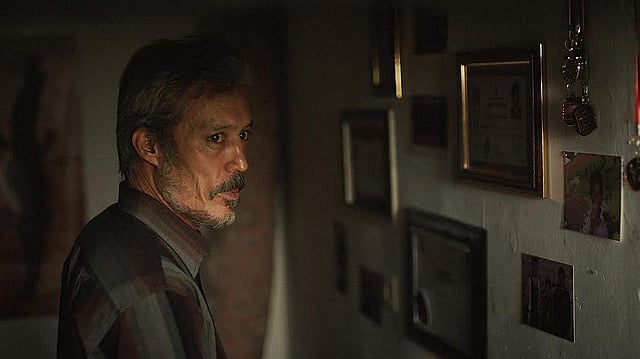
A still from the film
Ten years later we meet Leila again, now a young wife and mother, and a maid in a kind Iranian household. She is facing loss yet again but can’t go public about the sudden death of her husband Hussain lest she and her son Omid be forced to go back to Afghanistan. The last story set in 2021 is centred on Leila’s brother Ghasem. His son leaves home, in the guise of finding a job in Turkey, only to join forces in Syria to never return from the battlefront. How long can his Ghasem hide this reality from his wife?
Amirfazli and Ghasemi believe in the power of the implicit. It’s the TV and radio in the background that help fill up the details of the time. The stories are told straight and simple, without sentimentality and stylistic flourishes. It’s quietude and thrift that lend the film its humane depth and overwhelming compassion. There’s clarity, conviction, and grace to their filmmaking.
It's quite evidently a character-focused film, and each of the three leads is dealt with empathy, leaving one affected and moved by their plight and boundless tragedy. The non-professional actors are surprisingly competent, making the pain vivid with their wonderful performances marked by gravitas and profundity. There is fluidity and subtlety of expression and an easy and effortless presence to all three. Mohammad Hosseini makes you care for his innocent, vulnerable, and imperiled Mohammad, Hamideh Jafari is luminous as the anguished Leila, and Bashir Nikzad as Ghasem truly looks as though he is carrying the weight of the entire world on his shoulder. Together they personify the resilience and spirit of survival, something that is universal to refugees, constantly in the eye of hatred and bigotry, around the globe. But the filmmakers also offer a note of hope in the end. When all doors seem to close, a window could still be open. Beyond the alienation, there could still be a possibility to belong.
==
In The Land Of Brothers

Reviewed by: Amber Wilkinson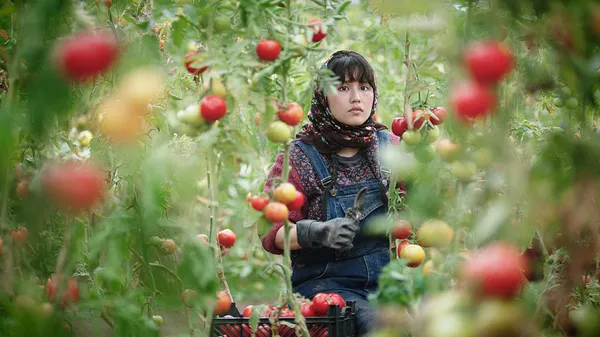 "Thoughtful and stripped of sensationalism, each story and its wider implications bite deep." | Photo: Courtesy of Sundance Institute
 Bluesky
The debut film from Raha Amirfazli and Alireza Ghasemi is a refugee drama with a difference, both in terms of its setting and its timescale. The stream of films about the refugee experience on the fringes of Europe has continued this year with the likes of Io Capitano and The Green Border, which, like many before them, focus on the struggles of refugees to reach safe haven.
This triptych of stories - connected by an extended family - takes a different tack. It is set within Iran after migration has happened and bookended by the beginning and the end of the US invasion of Afghanistan from 2001 to 2021, allowing the writer/directors to explore systemic injustices faced by those who have sought sanctuary in the country. The invasion was just the driver of the latest wave of refugees, with an intertitle at the start of the film noting that five million Afghans have fled to Iran, which has led to it being referred to as “the land of brothers”.
Amirfazli and Ghasemi’s trio of stories, each self-contained but building a cumulative head of steam, suggest the situation is a lot less familial than that description might indicate. Starting in the cold winter of 2001, we meet young Mohammad (Mohammad Hosseini). At night, he works with his extended family to harvest tomatoes in enormous greenhouses and helps his cousin Leila (Hamideh Jafari) with her English, while in the daytime he seems to be doing well at school. One day on the way home, however, he and his mates are stopped by the police and, because he doesn’t have his resident’s card on him, he finds himself scooped up in a deliberately targeted sweep to get some free labour down at the station. Amirfazli and Ghasemi show how this situation escalates over time leaving Mohammad with few options as a means of escape.
This segment is marked by a creeping dread and inevitability of harm that flows through into the next story ten years later. Leila is now a married adult with a young son, working for upper middle-class couple Negin (Marjan Ettefaghian) and Benham (Mehran Vosoughi) and who are also soon to become migrants. This chapter of her story begins with a tragedy that puts Leila in an almost impossible position of keeping up appearances in order to protect herself and her son from deportation.
Finally, in the concluding segment we encounter her brother Qasem (Bashir Nikzad), who was briefly glimpsed in the film’s first section. He is also now married to Deaf seamstress Hanieh (Marjan Khaleghi) with a grown son. Events are again triggered by tragedy only this time the directors use it to show how perverse the country’s systems of acceptance can be.
Each of these stories is robust and self-contained but the directors achieve a flow of ideas through them, helped by the spare but lilting score from Frederic Alverez. Throughout, Amirfazli and Ghasemi find strength in contrast, whether it is the warmth of the greenhouse world compared to the cold outside in Mohammad’s world, the promise of a new life for Leila’s employers in comparison to the threat she faces or the pain that strips any potential joy from events in the life of Qasem. Thoughtful and stripped of sensationalism, each story and its wider implications bite deep.Reviewed on: 23 Jan 2024
==
HomeFilm Reviews2024
FestivalsSundanceFilm Reviews
“IN THE LAND OF BROTHERS”
Sara Clements
By
Sara Clements
February 16, 2024
FacebookTwitterCopy URL
In The Land Of Brothers
THE STORY – Three members of an extended Afghan family start their lives over in Iran as refugees, unaware they face a decades-long struggle ahead to be “at home.”
THE CAST – Hamideh Jafari, Bashir Nikzad & Mohammad Hosseini
THE TEAM – Raha Amirfazli & Alireza Ghasemi (Directors/Writers)
THE RUNNING TIME – 95 Minutes
Raha Amirfazli and Alireza Ghasemi are two promising new voices in Iranian cinema. Their debut film, “In the Land of Brothers,” aims to shed light on the harsh reality faced by almost five million Afghan refugees living in Iran. The film tells three interconnected stories that portray the challenges of starting over in an unwelcoming environment while also highlighting the resilience and strength of the Afghan people. The story follows three members of one family over 30 years as they face threats of police brutality, deportation, and further war. The Afghan actors deliver powerful and humanistic performances, making the film an emotional journey that explores the search for a place to call home.
The film begins with a quote stating that Iran is called “The Land of their Brothers,” but the Afghan refugees who live there aren’t treated anything like brothers. It follows an Afghan family in Iran, whose story is separated into chapters. The first takes place in 2001 and follows Mohammad (Mohammad Hosseini). Just a teenager and living on a tomato farm with his family, he is arrested outside of school for not having an ID. Through Mohammad’s story, you get an early glimpse of how Iran never feels like a home to newcomers, as they constantly look over their shoulders. When unable to present his ID, Mohammad and many other Afghan men are made to work at the police station, whether filing paperwork or plastering walls. He keeps his work at the station a secret to avoid putting his family, like his father, in danger. Although Mohammad remains quite stoic throughout, you can feel his anger and frustration building up over the situation. Eventually, he resorts to drastic measures to get himself out of it.
The story then jumps to 2010, where we follow Leila (Hamideh Jafari), who used to live with Mohammad on the tomato farm. In the present, she has built a new life for herself. She has a beautiful house, is married, and has a young son. Suddenly, her husband dies, leaving her with the question of what to do. Because she has no insurance, she can’t go to the hospital, and calling the police might risk her deportation. To make things worse, she has a house full of guests, and it won’t be easy to hide her dead husband right under their noses. In this chapter, there are many powerful moments of wordless emotion as Leila tries not to let on that her world is essentially crumbling around her. The cinematography shines in this chapter, showing a stark contrast between Leila’s experience and that of her Iranian guests. Shot from the outside looking in, the top and bottom levels of the house are like two different worlds, with Leila’s guests laughing and singing below while she stands still above, frozen in shock and fear.
The third chapter jumps another ten years, looking at the life of Leila’s brother, Qasem (Bashir Nikzad). Like his sister, he has also built a home for himself with a wife and children. Upon learning that his son secretly joined Iran’s forces and has been killed in action in Syria, Qasem must decide whether or not to break the news to his wife. This chapter solidifies what the war in Afghanistan has done to these families and the secrets and lies they’ve had to keep to protect themselves and their loved ones.
“In the Land of Brothers” takes the audience on a journey to different parts of Iran, showcasing the country’s diverse landscapes throughout the seasons. While the transitions between stories can make the film feel incomplete, each chapter offers a unique perspective on the long-term impact of the war in Afghanistan on its people. Many have lost their youth and loved ones due to the conflict, but they find strength in their families and loved ones to cope with the trauma. This film is an inspiring and profound piece of work that sheds light on the experiences of Afghan refugees and offers a perspective of Iran that many viewers may not have seen before.
Powered by JustWatch
==
‘In The Land Of Brothers’ Review – A Poignant Story Of Resiliency [Sundance 2024]
By M.N. Miller
February 5, 2024
No Comments
The narrative structure laid out in the new film In the Land of Brothers will remind you of the one from fellow Sundance drama All Dirt Roads Taste of Salt. The story spans three generations of Afghan women over twenty years. During the American invasion of Afghanistan, their family became refugees in Iran. The group is not nuclear but extended. Iran has become a hotbed for refugees because it has one of the largest Afghan populations in the world.
Under the direction of Raha Amirfazli and Alireza Ghasemi, In the Land of Brothers suggests that Iran opens its arms to displaced populations under an umbrella of love. Still, the reality deals with socioeconomic roadblocks and Afghanophobia. That includes inconsistent immigration policies, mass deportations, and the detention of undocumented people, which has led to an Afghan immigrant crisis. Ghasemi and Amirfazli’s script follows three refugee family members. They are not nuclear or extended but connected by walking similar paths as previous and current generations.
 Mohammad Hosseiniin in the film In the Land of Brothers | Image via See Through Films, Inc.
The film starts in 2001 with Mohammad, a precocious teenage boy who would have a promising future if it weren’t for the predicament he finds himself in. There’s Leila (Hamideh Jafari), a lonely young woman boxed in by her surroundings and secrets. She is currently tethering herself to a housekeeping job for fear of having her and her son deported. And finally, we have Qasem (Bashir Nikzad), whose family’s dreams are about to be shattered, much like undocumented immigrants in the United States, while working and waiting on pins and needles for citizenship.
Watching In the Land of Brothers provides a raw, moving, and poignant view of the displaced immigrant experience. The film is compelling because it speaks to the sociological perspective of the importance of communities formed for displaced populations. You’ll often hear of unique populations developing support systems in various cities across North America. The same is true in Iran, with the common theme of hardships that those who are displaced feel. One who creates a homestead in a foreign land that will view them as outsiders for generations.
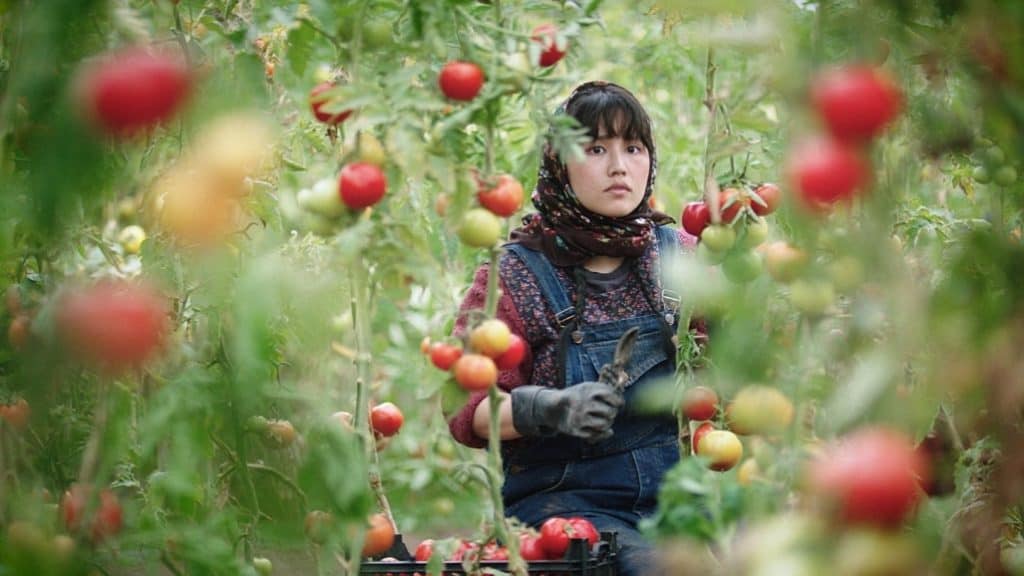
 Hamideh Jafari in the film In the Land of Brothers | Image via See Through Films, Inc.
The end result of In the Land of Brothers is a remarkable story of resiliency. Along the way, the filmmakers build a visceral world of longing and pensive sadness that is front and center. The lovely score by composer Frederic Alvarez and the cinematography by Farshad Mohammadi, which can be overwhelming at times, then highlight those qualities.
This is ambitious, uncompromising filmmaking that takes the viewer to a different place that’s all too similar to how the less fortunate are treated and viewed at home and abroad. Raha Amirfazli and Alireza Ghasemi’s film offers little to no easy solutions to the problems this unique population faces. Only presenting them as they are, without pity or envy. Just an honest exploration of the trauma endured for the opportunity of a better life.
In The Land of Brothers had its World Premiere in the World Cinema Dramatic Competition section of the 2024 Sundance Film Festival.
Directors: Raha Amirfazli, Alireza Ghasemi
Writers: Alireza Ghasemi, Raha Amirfazli
==
==
==
==
==
==

Comments
Post a Comment