불안은 영혼을 잠식- 위키백과, Ali: Fear Eats The Soul 1974
불안은 영혼을 잠식한다
 Ali: Fear Eats The Soul, Angst Essen Seele Auf | |
|---|---|
| 감독 | 라이너 베르너 파스빈더 |
| 각본 | 라이너 베르너 파스빈더 |
| 출연 | 브리지트 미라 |
| 촬영 | 저건 저지스 |
| 편집 | 데아 에이메스 |
| 국가 | 독일 |
《불안은 영혼을 잠식한다》(Ali: Fear Eats The Soul, Angst Essen Seele Auf)는 서독에서 제작된 라이너 베르너 파스빈더 감독의 1974년 드라마, 멜로/로맨스 영화이다. 브리지트 미라 등이 주연으로 출연하였다.
출연
[편집]주연
[편집]조연
[편집]외부 링크
[편집]- (영어) 불안은 영혼을 잠식한다 - 인터넷 영화 데이터베이스
- (영어) 불안은 영혼을 잠식한다 – 올무비
- Ali: Fear Eats the Soul: One Love, Two Oppressions an essay by Chris Fujiwara at the 크라이테리언 컬렉션
Ali: Fear Eats the Soul
| Ali: Fear Eats the Soul | |
|---|---|
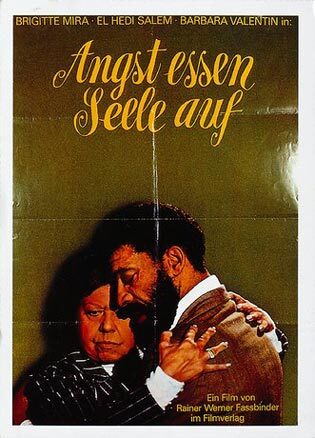
 German theatrical release poster | |
| Angst essen Seele auf | |
| Directed by | Rainer Werner Fassbinder |
| Written by | Rainer Werner Fassbinder |
| Produced by | Rainer Werner Fassbinder |
| Starring | |
| Cinematography | Jürgen Jürges |
| Edited by | Thea Eymèsz |
Production company | Tango-Film |
| Distributed by | Filmverlag der Autoren GmbH & Co. Vertriebs KG |
Release date |
|
Running time | 93 minutes |
| Country | West Germany |
| Language | German |
Ali: Fear Eats the Soul (German: Angst essen Seele auf) is a 1974 West German drama film written and directed by Rainer Werner Fassbinder, starring Brigitte Mira and El Hedi ben Salem. The film won the International Federation of Film Critics award for best in-competition movie and the Prize of the Ecumenical Jury at the 1974 Cannes Film Festival.[1] It is considered to be one of Fassbinder's most powerful works and is hailed by many as a masterpiece.
The film revolves around the romance that develops between Emmi, an elderly German woman, and Ali, a Moroccan migrant worker in postwar West Germany.
Plot
[edit]The film takes place during an unspecified number of months after the Munich Massacre in West Germany. Emmi, a 60-year-old window cleaner and widow, enters a bar, driven in by the rain and wanting to listen to the music being played inside. The barmaid goads Ali, a Moroccan Gastarbeiter or guest worker in his late thirties, to ask Emmi to dance. She accepts. They develop a friendship and Ali ends up staying overnight at Emmi's apartment. After more interaction, their connection deepens and Ali moves in. Eager to share her happiness, Emmi introduces Ali to her children: Krista and her domineering husband, Eugen. Eugen scoffs, convinced Emmi has lost her mind, while Krista dismisses it as a folly fueled by years of widowhood.
Their relationship is threatened when the landlord's son, who has been sent on the assumption that Emmi has taken in a lodger, tells Emmi that subletting is against Emmi's tenancy agreement, and that Ali must leave within a day. Fearful of losing Ali, Emmi claims that she and Ali are planning to marry. After the landlord's son apologises for the misapprehension and leaves, Emmi speaks to Ali and apologises for having invented the idea of her marrying him, but is surprised by Ali when he says that it is an excellent idea. The film then shows them in a civil court, married.
Their marriage is looked upon negatively by those who live near them, which include apartment tenants and shopkeepers. Emmi is shunned by her colleagues, and Ali faces discrimination at every turn. When Emmi invites her three grown children and son-in-law to meet Ali, they openly reject him. One of Emmi's sons smashes her TV set in anger, her other son declares she must have lost her mind, calling her a "whore". Before they leave Emmi's apartment, her daughter describes it as a "pigsty".
Emmi's sadness towards this rejection washes away as her optimism resurfaces and she decides that she and Ali should take a long holiday together to escape the discrimination, convinced that upon their return, they will have been missed and will be welcomed back. After their return, they face less discrimination, but only because neighbouring tenants and shopkeepers see the gain in treating Emmi better, not because they have outgrown their prejudices.
Wanting to get back with her old friends after their apparent renewed respect, Emmi begins to neglect Ali and adopt some of their attitudes toward him. She becomes more strict, ordering him to do more things. When co-workers visit and remark on how surprisingly clean he is and comment on his muscles, she shows him off as if he were an object. This causes Ali to leave, to which Emmi remarks to her friends of his "mood swings" and that his attitude must be due to his "foreigner mentality". Ali seeks comfort in bar maid Barbara, who it is suggested he had a relationship with prior to meeting Emmi. Ali returns to Barbara on another day, spending the night with her. Emmi visits Ali at work, where he pretends he doesn't know her; his workmates make fun of her age, calling her his "Moroccan grandmother", to which Ali does not intervene.
When it seems as if the relationship is beyond repair, Emmi goes back to the bar where they first met to meet with Ali. She has the barmaid play the same song on the jukebox that led to their dance at the beginning of the film. Dancing together, Emmi emphasizes that she knows she is old and that he is free to come and go. However, when they are together, they must be kind to each other. Ali agrees and they declare their love. After collapsing in Emmi's arms from a burst stomach ulcer, Ali is taken to the hospital with Emmi at his side. A doctor tells her the illness is common among foreign workers because of the stress they face in everyday life. He explains that Ali will undergo surgery to remove the ulcer, but will probably be back in six months with a new lesion. Emmi declares that she will do everything in her power to prevent this from happening. The film ends with her holding Ali's hand.
Cast
[edit]- Brigitte Mira – Emmi Kurowski
- El Hedi ben Salem – Ali
- Barbara Valentin – Barbara
- Irm Hermann – Krista
- Rainer Werner Fassbinder – Eugen
- Karl Scheydt – Albert Kurowski
- Marquard Bohm – Gruber
- Walter Sedlmayr – Angermayer
- Doris Mattes – Mrs. Angermeyer (as Doris Mathes)
- Lilo Pempeit – Mrs. Münchmeyer
- Gusti Kreissl – Paula
- Margit Symo – Hedwig
- Elisabeth Bertram – Frieda
- Helga Ballhaus – Yolanda
- Elma Karlowa – Mrs. Kargus
- Anita Bucher – Mrs. Ellis
- Katharina Herberg – Woman in Bar
Production
[edit]The film was shot in just under two weeks, and was planned as an exercise in film-making for Fassbinder, to fill in the time in his schedule between the work on two other films, Martha and Effi Briest.[1]
Ali is played by El Hedi ben Salem, who was Fassbinder's partner at the time. Fassbinder has a cameo appearance as Emmi's son in law. Irm Hermann, who plays Emmi's daughter Krista, had a turbulent relationship with Fassbinder in real life, having been quoted as saying of Fassbinder, "He couldn't conceive of my refusing him, and he tried everything. He almost beat me to death on the streets of Bochum ....".[2] And Fassbinder grew up under some of the domestic effects of immigrant prejudice, given that his mother immigrated back to Germany from Poland after the Soviet Occupation and Fassbinder grew up in a turbulent and eventually divorcing household where immigrating relatives stayed with them.[3][4]
The original German title Angst essen Seele auf is deliberately grammatically incorrect, translating literally as "Fear eat soul up." The correct German form would be "Angst isst die Seele auf" – which (without the definite article "die") became the title of a related 2002 short film also starring Mira. The title is one of the things Ali tells Emmi. As an immigrant, he speaks in what can be referred to as "broken German" consistently throughout the film. The line of dialogue he utters is simply "Fear eat soul up." Since Ali's poor German grammar is translated literally in the film's English subtitles, the subtitles for Ali's dialogue are similarly riddled with grammatical errors.
Ali is in part an homage to the films of Douglas Sirk, in particular Imitation of Life (1959) and All That Heaven Allows (1955). The most overt homage is the scene in which Emmi's son kicks in the television (an important symbol in All That Heaven Allows) after finding out that his mother has married a north African.[5]
Themes and symbolism
[edit]"Fear eats the soul", which is one of the things Ali says while talking with Emmi early in the movie, becomes almost literal later on, when it turns out that Ali has a stomach ulcer and is hospitalised. The characters are also often shown on screen in exaggerated ways; characters are shown far away from the camera to emphasise how distant from society Emmi and Ali feel, while their apartment is shot in a claustrophobic manner, to symbolise the fear they feel in their relationship and everyday life. Spectatorship in the film embodies social oppression against marginalized individuals, yet ironically, such distancing diminishes when the neighbourhood sees a utilitarian need in Emmi and Ali, as "productive and consuming bodies".[6][7]
Release
[edit]Ali: Fear Eats the Soul was released in West Germany on March 5, 1974.[8] The film has been released by the Criterion Collection as a region 1 DVD with English subtitles.[9] The Blu-Ray contains the contents of both disks of the 2003 DVD release, which include interviews with actress Brigitte Mira and editor Thea Eymes. A BBC documentary based on famous German directors of the era, which compares Fassbinder, Werner Herzog, and Wim Wenders, is also included.[10]
Reception
[edit]Upon release
[edit]The film gained critical acclaim upon its release, with the film's tone and Fassbinder's direction being singled out as highlights. Writing for The Chicago Sun-Times, Roger Ebert gave the film 4 out of 4 stars, writing: "[Fassbinder] nudges us to get outside the movie and look at it as absurd, as black humor, as [a] comment on these people so hopelessly trapped in their dreary surroundings and by their fates...Is [Fassbinder] sometimes being deliberately funny? I’m sure of it. His style and tone are so adamant that audiences sometimes just sit in silence, uncertain of the right response. With some films, that indicates the director's loss of control over tone. With Fassbinder, it seems to be the response he wants."[11] Gene Moskowitz of Variety gave it a similarly positive review, calling the film "Not showy for exploitation, too observant and cool for robust hypoing".[12] Vincent Canby of The New York Times dissented somewhat, calling it a "courageous attempt" and praising Mira and Salem's performances, while criticizing the "posterlike blandness" of the movie.[13] Despite the acclaim his movie received, Fassbinder stated that he thought it was only the eighth best movie he made.[10]
Modern reception
[edit]The film has continued to receive positive reviews, with Mira and Salem's acting being praised as a highlight. On Rotten Tomatoes, the film has an approval rating of 100%, based on 36 reviews, with an average rating of 9.3/10. The website's critical consensus reads "Regarded as one of the high-water marks in German New Wave cinema of the 1970s, Ali: Fear Eats the Soul is at once an intense portrayal of a relationship and a tribute to one of Rainer Werner Fassbinder's film heroes, Douglas Sirk."[14]
Martin Scorsese included it on a list of "39 Essential Foreign Films for a Young Filmmaker."[15]
Writing for The New York Times, Alex Abramovich calls Ali "The most thought-provoking, and beautiful, of [Fassbinder's] films"[10] Richard Brody of The New Yorker praised the direction, writing "Fassbinder uses the camera with a precise, novelistic touch", and he praised Fassbinder's tributes to other films, writing Fassbinder "didn't just make use of prior forms, he quoted them, and derived from them the ironies implicit in his melodramatic styles."[16] Writing for The Guardian, Peter Bradshaw calls Mira and Salem's performance "superb", and "The most purely lovable characters I have ever seen on a movie screen".[17] Re-reviewing the movie for Great Movies, Roger Ebert calls the film "very powerful" and ends his review by writing "Ali: Fear Eats the Soul might sound like improbable, contrived soap opera. It doesn't play that way."[7]
The film made the Sight & Sound Critics' list of 100 Greatest films of world cinema in 2012, and rose even higher in the ranks at the 2022 polls of both Critics and Directors, ranking #52 at each.
Accolades
[edit]| Awards | Year/ Date of ceremony | Category | Recipient(s) | Result | Ref(s) |
|---|---|---|---|---|---|
| Cannes Film Festival | May 9–24, 1974 | International Federation of Film Critics best film (In competition) | Rainer Werner Fassbinder | Won | [18] |
| Cannes Film Festival | May 9–24, 1974 | Prize of the Ecumenical Jury | Ali: Fear eats the soul | Won | [19] |
| Chicago International Film Festival | 1974 | Silver Hugo | Ali: Fear Eats the Soul | Won | [20] |
| German Film Award | 1974 | Best Leading Actress | Brigitte Mira | Won | [21] |
References
[edit]- ^ "Festival de Cannes: Ali: Fear Eats the Soul". festival-cannes.com. Retrieved 2009-04-26.
- ^ (Baer 1986, p. 65)
- ^ (Thomsen 2004, p. 3)
- ^ (Watson 1992, p. 13)
- ^ Töteberg, Michael (1990). "Ali: Fear Eats the Soul: All That Fassbinder Allows". Posting of a published essay by Fassbinder's biographer and editor.
- ^ Gorfinkel, Elena (28 May 2012). Peucker, Brigitte (ed.). Ali: Fear Eats the Soul and Fassbinder's Asynchronous Bodies. 2012 Blackwell Publishing Ltd. pp. 505–510. doi:10.1002/9781118275733. ISBN 9781405191630.
- ^ a b Ebert, Roger (27 April 1997). "Great Movie: Ali: Fear Eats the Soul". RogerEbert.com. Retrieved 19 March 2018.
- ^ "Angst essen Seele auf" (in German). Filmportal.de. Retrieved June 13, 2018.
- ^ Ali: Fear Eats the Soul (Blu-Ray (region 1)). The Criterion Collection. September 30, 2014. ISBN 9781604659030. OCLC 892562488. See Ali: Fear Eats the Soul (DVD (region 1)). The Criterion Collection. June 24, 2003. ISBN 9781559409391. OCLC 779179093.
- ^ a b c Abramovich, Alex (22 June 2003). "FILM/DVD'S; Further From Heaven". The New York Times. Retrieved 23 March 2018.
- ^ Ebert, Roger (5 October 1974). "Ali: Fear Ears the Soul". Chicago Sun-Times. Retrieved 20 March 2018 – via RogerEbert.com.
- ^ Moskowitz, Gene (22 May 1974). "Film Reviews: Angst essen seele auf (Fear eats the soul)". Variety. Retrieved 20 March 2018 – via CineFiles.
- ^ Canby, Vincent (7 October 1974). "At the Film Festival: 'Ali'". The New York Times. Retrieved 27 March 2018.
- ^ "Angst essen Seele auf (Ali: Fear Eats the Soul)". Rotten Tomatoes. Retrieved 13 September 2021.
- ^ "Martin Scorsese Creates a List of 39 Essential Foreign Films for a Young Filmmaker". Open Culture. 15 October 2014. Archived from the original on February 7, 2015. Retrieved 1 February 2015.
- ^ Brody, Richard (15 March 2010). "DVD of the Week: Ali: Fear Eats the Soul". The New Yorker. Retrieved 26 March 2018.
- ^ Bradshaw, Peter (30 March 2017). "Fear Eats the Soul review – love versus racism in Fassbinder's exquisite tale". The Guardian. Retrieved 27 March 2018.
- ^ "FIPRESCI 1974 Cannes awards". fipresci.org. Retrieved 17 March 2018.
- ^ "Tous les autres s'appellent Ali". cannes.juryoecumenique.org. Retrieved 17 March 2018.
- ^ "#56Films to Stream: Ali: Fear Eats the Soul (1974)". chicagofilmfestival.com. 6 May 2020. Retrieved 5 May 2022.
- ^ "FEAR EATS THE SOUL (ANGST ESSEN SEELE AUF)". german-films.de. Retrieved 5 May 2022.[permanent dead link]
Sources
[edit]- Baer, Harry (1986). Ya Dormiré cuando este Muerto. Seix Barrall. ISBN 84-322-4572-0.
- Cottingham, Laura (2005). Angst essen Seele auf. London: British Film Institute. ISBN 978-1844570713.
- Thomsen, Christian Braad (2004). Fassbinder: Life and Work of a Provocative Genius. University of Minnesota Press. ISBN 0-8166-4364-4.
- Watson, Wallace Steadman (July 1992). "The Bitter Tears of RWF". Sight & Sound. British Film Institute: 24–29. ISSN 0037-4806.
Further reading
[edit]External links
[edit]- Ali: Fear Eats the Soul at IMDb
- Ali: Fear Eats the Soul at Rotten Tomatoes
- Ali: Fear Eats the Soul at AllMovie
- Ali: Fear Eats the Soul at the TCM Movie Database
- Ali: Fear Eats the Soul: One Love, Two Oppressions an essay by Chris Fujiwara at the Criterion Collection

불안과 영혼
 |
| 불안은 영혼을 먹는다. | |
|---|---|
| Angst essen Seele auf | |
| 감독 | 라이너 베르너 패스빈더 |
| 각본 | 라이너 베르너 패스빈더 |
| 제작 | 라이너 베르너 패스빈더 |
| 출연자 | 브리기테 미라 엘 헤디 벤 살렘 |
| 음악 | 라이너 베르너 패스빈더 |
| 촬영 | 유르겐 유르게스 |
| 편집 | 테어 아이메스 |
| 제작회사 | 탱고 필름 |
| 공개 |  1974년 3월 5일 1974년 3월 5일 |
| 상영시간 | 93분 |
| 제작국 | 서독 |
| 언어 | 독일어 |
' 불안은 영혼을 먹는다'(후안은 참을을 힘차게 한다, 원제 (독일어): Angst essen Seele auf , 영국: Ali: Fear Eats the Soul )는 1974년 에 뉴저먼 시네마 를 대표하는 감독 라이너 베르나 패스스빈더 에 의해 제작된 독일 영화 이다. '불안과 영혼'의 일본제도 있다.
청소부로 일하는 외로운 독일인 노녀와 외국인 노동자인 크게 연하의 모로코인과의 사랑과 고뇌를 그린 작품으로, 제27회 칸 국제영화제 에서 국제영화 비평가 연맹상 과 에큐메니컬 심사위원상 (제1회)의 2관에 빛나고, 패스빈더의 이름을 일약 국제적으로 한 대표작의 하나. 주연인 브리기테 미라 는 독일 영화상에서 주연 여배우상을 획득했다.
줄거리
[ 편집 ]청소부로 일하면서 혼자 생활을 하고 있는 60대 독일인 여성 에미는, 비가입에 들어간 아랍계의 손님이 많은 바로, 20세 이상이나 연하의 모로코인의 자동차공 개미를 만난다. 춤을 추고 이야기를 하고 의기투합한 두 사람은 함께 살기 시작하고 결혼한다. 외국인에 대한 편견이 강한 그 마을에서, 아랍인의 외국인 노동자와 함께 있는 것으로, 이웃, 동료, 가족을 비롯해 가는 선두의 사람들로부터 차별과 편견으로 가득한 취급을 받는다. 에미는 개미를 지키고, 개미는 그러한 인종 차별 자에 대해 관용에 행동하고, 두 사람은 행복하게 살고 있었지만, 어느 날 에미가 개미의 자존심을 해치는 일을 했기 때문에 개미는 집을 나간다. . 개미를 찾아 에미는 두 사람이 만난 바에 가서 먼저 춤을 춘 댄스의 곡을 건다. 두 사람은 다시 춤을 추기 시작하지만 갑자기 개미가 복통으로 쓰러져 병원으로 옮겨집니다. 의사들로부터 일상적인 차별로 인한 스트레스에서 오는 위궤양 임을 알린 에미는 거짓말 개미에 조용히 달라붙는다.
직원
[ 편집 ]- 감독·제작·각본·음악: 라이너·베르너·패스빈더
- 촬영: 유르겐 유르게스
- 편집 : 테어 아이메스
캐스트
[ 편집 ]- 에미 크로스키 : 브리 기테 미라 - 수석 과부
- 개미: 엘 에디 벤 살람 - 모로코 노동자
- 바바라 : 바바라 발렌틴 - 바의 여주인
- 크리스타: 일름 헬만 - 에미의 딸
- 오이겐: 라이너 베르너 패스스빈더 - 에미의 딸 남편
제작
[ 편집 ]- 원제는, 극중에서 외국인 노동자의 개미가 따뜻한 독일어로 말하는 대사 「Angst essen Seele auf(두려움은 영혼을 먹는다)」에 근거한다. die Seele auf "), 그대로 사용되고있다.
- 저예산으로 15일간 촬영된 [ 1 ] 주요 출연자는 모두 패스빈더 영화의 단골이다.
- 개미를 연기한 엘 에디 벤 살람 (독일어)은 모로코 에 처자 가 있었지만 당시 패스 빈더의 연인 이었다. 했다고 여겨진다 [ 2 ] 그의 죽음을 알게 된 패스빈더는 ' 케렐 '(1982년)을 살람에게 바치고 있다.
다른 작품과의 관련성
[ 편집 ]- 본작은, 패스빈더가 경애한 더글러스 ·서크 감독 [ 3 ] 의 영화 「하늘은 모두 용서해 준다」라고 「슬픔은 하늘의 그분에게 」에의 오마쥬로 여겨진다 [ 4 ] .
- 토드 헤인즈 는 ' 에덴보다 그분에게 '(2002년)에 대해 본작과 '하늘은 모두 용서해 준다' ( 더글라스 서크 )에 대한 오마주로 제작했다고 발언하고 있다.
각주
[ 편집 ]- ^ 아카시 마사키「라이너・베르너・패스빈더 필모그래피/해설」 「영화는 머리를 해방한다」, 쿄쿠사 서방, 1998년, 173-219쪽.
- ^ 사인과 몰년은 Wikipedia 영어판 · 독일어판 에 근거한다 .
- ^ 패스빈더는 『사계절을 파는 남자』(1971년) 이후 더글러스 서크 에 대한 기울기를 짙게 하고 있었다. 더글러스 서크에 대해 발표하고 서크 작품의 매력을 논의 한 후 "모든 작품을보고 싶습니다. 서크가 만든 39 개 모두를보고 싶습니다. 나아갈 수 있을지도 모른다. 그림을 6개 보았다. 거기에는 이 세상에서 가장 아름다운 것이 있었다 . ) . 다음 저작집에 수록. 저, 아카시 마사키역 『영화는 머리를 해방한다』 정초서방, 1998년(원저 1984년).
- ^ 아카시 마사키「라이너・베르너・패스빈더 기본적으로 (..) 서크의 『하늘은 모두 용서해 준다』의 요소를 이용해 만든 것이지만, 패스빈더류에 소화되고 있기 때문에, 그렇게 말할 때까지는 거의 깨닫지 못한다.
영화 "불안은 영혼을 잠식한다"는 라이너 베르너 파스빈더 감독이 1974년 제작한 독일 작품인데요. 나이든 독일 여성과 젊은 모로코 남성 상이의 로멘스 이야기를 다루고 있습니다. 오늘은 파스빈더 감독의 영화 불안은 영혼을 잠식한다를 알아보겠습니다.
라이너 베르너 파스빈더 감독은 어떤 인물인가
파스빈더 감독은 1945년 독일에서 태어났고, 어려서부터 문학이나 연극, 영화 등에 많은 관심을 가졌습니다. 16살이 되던해 다니던 학교를 중퇴하고 뮌헨에서 일찍부터 배우와 극작가로 활동하기 시작했는데요. 그곳에서 도시의 활기 넘치는 아방가르드 연극계에 참여하게 되었습니다.
파스빈더는 1969년 영화 "사랑은 죽음보다 차갑다"로 감독 데뷔를 시작으로 20여년 동안 40편이 넘는 영화를 제작하고 히트시켰으며, 영화 뿐만 아니라 TV프로와 연극, 라이오 드라마까지 활발한 활동을 펼였습니다. 파스빈더의 가장 유명한 영화라고 한다면 바로 "불안은 영혼을 잠식한다"인데요. 이 영화는 나이든 독일 여성인 에미와 어린 소녀 사이의 예상치 못한 로맨스 이야기를 담고 있습니다.
파스빈더의 카메라 기술과 편집, 사운드 디자인의 새로운 시도와 영화를 이끌어가는 대담한 접근은 많은 관객들로 하여금 더욱 몰입하게 만드록 있습니다. 파스빈더는 영화 제작에만 몰두한 것이 아니라 인종차별, 성차별이나 동성애혐오, 독일의 파시즘 유산 등 사회적, 정치적 문제를 해결하는 데도 많은 활동을 했습니다. 파스빈더는 1982년 37세의 젊은 나이로 세상을 떠났지만, 그가 남긴 작품과 영향력은 현재까지도 많은 이들의 기억속에 남아있습니다.
영화 "불안은 영혼을 잠식한다"의 줄거리
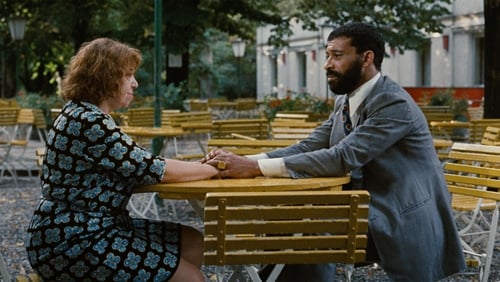
저녁 퇴근 후 비를 피하기 위해 술집을 방문하는 60대 청소부 미망인 에미는 젊은 고객들 사이에서 소외감을 느끼며 앉아 있습니다. 그녀는 우연히 젊은 모로코 이민자 알리와 말을 나누게 됩니다. 말이 통하지 않고, 살아왔던 현재 살고 있는 배경이 완전히 다른 두 사람은 왠지 모르는 공감대를 형성하며 서로에게 이끌리고 서로 춤까지 추게 됩니다.
두사람은 많은 나이 차이와 배경의 차이에도 불구하고 서로 깊은 관계로 발전합니다. 두사람의 만남은 주변 사람들이나 가족들의 강한 반대에 부딪치지만 둘은 흔들리지 않고 관계를 이어갑니다. 에미의 성인 자녀와 이웃들, 그리고 직장 동료들은 둘의 만남에 충격을 받으며 비난의 반응을 보입니다. 독일 사회에서도 여전히 뿌리박혀있는 인종차별주의가 팽배했고 외국인에 대한 혐오증도 만연한 상황이었습니다.
그들은 주변 사람들과 사회적인 편견에도 불구하고 관계가 더욱 발전하며, 결국 이사를 하고 둘은 결혼을 하게 됩니다. 하지만, 그들의 결혼생활은 가족과 주변 사람들의 반대에 오래가지 못하는데요. 에미의 자녀들은 알리를 양아버지로 받아들이기를 거부하고, 이웃들은 수근대기 시작합니다. 둘은 많은 어려움을 겪게 되는데, 끝까지 포기하지 않고 서로를 의지하며 사회적 편견과 주변의 시선들을 극복해 나가게 됩니다.
영화 "불안은 영혼을 잠식한다"의 명장면
에미와 알리가 처음 만난 바에서 춤을 추는 장면이 영화 초반부터 상당히 인상적입니다. 이 장면은 당시 사회적 편견과 세대 차이를 극복하고 플로어에서 즐거운 시간을 갖는 모습은 두 주인공의 매력을 발산하기에 충분했습니다. 우아한 몸짓과 부드러운 눈빛을 통해 영화를 관람하는 이들로 하여금 앞으로 두 사람의 로맨스가 시작될 것을 예상하게 하는 장면이라 할 수 있습니다.
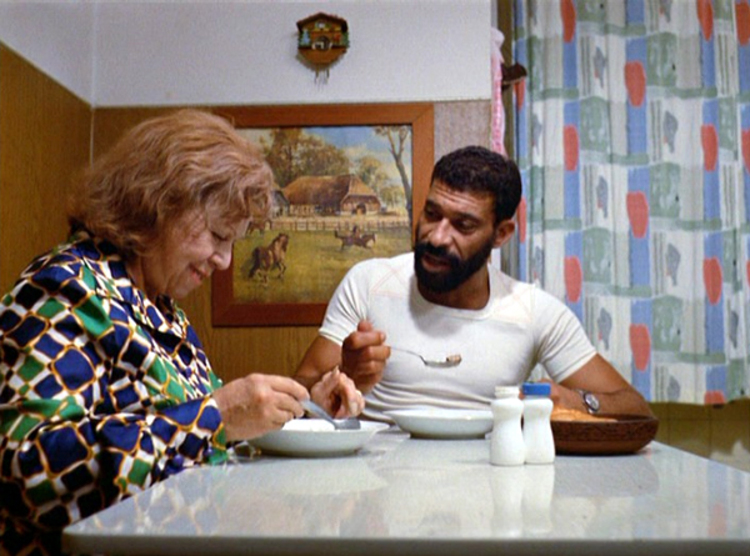
에미의 아파트에서 긴장된 가족 저녁식사를 하는 장면은 등장인물들 뿐만 아니라 보는 관객들도 긴장하게 만듭니다. 식사 자리에서 에미는 그녀의 자녀들을 알리에게 소개하는데, 아이들은 알리를 소개받고 깜짝 놀라고 받아들이지 못하는 표정과 행동은 이 영화가 순탄하지 않게 전개될 것을 관객들에게 설명하고 있습니다.
영화 "불안은 영혼을 잠식한다"에서 가장 가슴 아픈 장면은 해변에서 에미와 알리가 서로 침묵하고 있는 순간입니다. 손을 잡고 해안선을 따라 산책하며 두 사람의 사랑을 느끼면서도 불확실한 미래와 힘겨운 과정을 겪어내야 한다는 것을 암묵적으로 공감하는 장면이라 할 수 있습니다.
영화 "불안은 영혼을 잠식한다"를 보고
이 영화는 독일 사회에 만연한 인종차별과 외국인 혐오증에 대한 냉철하게 비판하고 있습니다. 파스빈더 감독은 에미와 알리 두 사람의 사랑에 대해 적대적이면서 편견과 차별이 만연한 사회적 분위기와 사람들의 시선을 세밀하게 표현하고 있습니다. 거기에 에미의 가족과 직장 동료들의 냉정한 눈빛과 노골적인 적대감은 사회적 분위기를 단적으로 보여주고 있습니다.
영화 "불안은 영혼을 잠식한다"는 내용적으로도 의미가 있지만 시각적으로도 상당히 인상적인 영화로, 매 장면마다 디테일한 촬영 기법 뿐만 아니라 미니멀한 세트 디자인과 색다른 영화 구성은 관객들로 하여금 친밀감과 몰입감을 느끼게 하고 기억속에 장면들을 깊이 심게 됩니다.
===
https://m.blog.naver.com/kimuchangmovie/223068551597
김우창 다큐멘터리 <기이한 생각의 바다에서>
(추천영화! 현재서울아트시네마에서 상영중이다.)
<불안은 영혼을 잠식한다>(1974)는 알렉산더클루게, 빔벤더스, 베르너헤어조크등과 더불어
뉴
저
먼
시
네
마
의
기
수
중
의
한
명
으
로
평
가
받
는
파
스
빈
더
의
대
표
작
이
다. 파
스
빈
더
의
뛰
어
난
멜
로
드
라
마
중
의
한
편
인
<
불
안
은
영
혼
을
잠
식
한
다
>
는 15
일
이
라
는
짧
은
기
간
동
안
촬
영
했
음
에
도
불
구
하
고
높
은
완
성
도
를
자
랑
한
다. 이
영
화
에
는
당
시
파
스
빈
더
의
실
제
애
인
이
었
던
엘
헤
디
벤
살
렘
과
파
스
빈
더
의
영
화
에
단
골
로
출
연
하
는
브
리
기
테
미
라
가
남
녀
주
인
공
으
로
등
장
해
서
뛰
어
난
연
기
를
보
여
준
다. 전
세
계
적
으
로
혐
오
와
차
별
이
난
무
하
는
이
시
대
에 19
7
0
년
대
에
이
미
6
0
대
노
년
의
독
일
여
성
과
젊
은
아
랍
청
년
의
사
랑
이
야
기
를
그
리
고
있
다
는
점
에
서
이
영
화
는
시
대
를
앞
서
간
측
면
이
있
으
며
지
금
시
점
에
서
보
더
라
도
급
진
적
인
면
모
마
저
있
다
고
할
수
있
을
것
이
다.
미
라)가
들
어
온
다. 그
녀
는
콜
라
를
한
잔
시
키
고
테
이
블
에
앉
아
있
는
데
바
에
서
친
구
들
과
술
을
마
시
고
있
던
모
로
코
출
신
의
이
주
노
동
자
인
알
리(엘
헤
디
벤
살
렘)가
갑
자
기
그
녀
에
게
춤
을
추
자
고
권
한
다. 에
미
와
함
께
춤
을
춘
것
을
계
기
로
알
리
는
그
녀
의
집
까
지
동
행
하
게
되
고
그
녀
의
집
에
서
하
룻
밤
을
머
무
는
가
운
데
둘
은
사
랑
에
빠
진
다. 에
미
와
알
리
는
결
혼
을
하
고
행
복
을
꿈
꾸
지
만
에
미
의
자
식
들
과
이
웃
들, 직
장
동
료
들
모
두
그
녀
를
비
난
한
다. 그
런
가
운
데
에
미
와
알
리
는
함
께
휴
가
를
떠
난
다. 그
들
이
휴
가
에
서
돌
아
오
자
주
변
사
람
들
이
그
들
을
예
전
과
는
다
르
게
호
의
적
으
로
대
한
다. 그
런
데
정
작
에
미
와
알
리
사
이
에
는
균
열
이
생
기
고
그
들
의
관
계
는
위
기
에
처
하
게
된
===

불안은 영혼을 잠식한다
Angst essen Seele auf Ali: Fear Eats the Soul
1974 독일 청소년 관람불가
드라마, 멜로·로맨스 상영시간 : 90분
개봉일 : 1997-11-22 누적관객 : 36명
감독 : 라이너 베르너 파스빈더
출연 : 브리지트 미라(에미 쿠로우스키) 엘 헤디 벤 살렘(알리) more네티즌7.77
60세의 청소부 엠미는 어느 날 비를 피해 아랍인들의 카페에 들어갔다가 모로코인 이주노동자 알리를 알게 된다. 이미 결혼한 자식이 셋이나 있는 늙은 엠미와 20대 중반의 알리는 서로의 외로움을 나누며 사랑을 느끼게 되는데, 그들은 가족과 직장, 이웃 사람들의 비난에도 아랑곳하지 않고 결국 히틀러의 단골 음식점에서 결혼식을 올린다.more
별점주기
 0리뷰 남기기
포토 (10)
불안은 영혼을 잠식한다
×
1 / 10






제작 노트
파스빈더의 초중반기 대표작인 '불안은 영혼을 잠식한다'는 너무나 뒤늦게 한국을 찾아 온 걸작이다. 외국인 노동자 알리와 중년부인 엠마의 기묘한 사랑은 전후 독일의 불안한 징후들과 함께 멜로드라마를 통해 사회의 통념들을 비웃던 파스빈더식 비극이다. 영화 속 주인공 알리는 동성애자로 알려진 파스빈더의 연인이기도 하였다. 파스빈더 또한 영화 속 엠마의 사위로 등장한다. 그 자신이 훌륭한 연극 배우이자 연출가였던 파스빈더는 연극적인 기법과 브레히트의 소외 효과를 적절히 사용하는 특출난 감독이었다. 특히 인물들을 극단으로 몰고가는 상황전개는 파스빈더가 얼마나 천재적이었는가를 새삼 실감케 한다. 후기작인 '13개의 달이 있는 해'에서 보여준 과격함과 극단적인 폭력성이나 '마리아 브라운의 결혼'에서 다룬 여인의 비극에 비해 다소 얌전하기는 하지만, '불안.'은 파스빈더의 대중적인 성향과 정수가 고스란히 담겨 있는 아름다운 작품이다. 비록 짧은 개봉일로 인해 관객들로부터 외면을 받기는 했어도 영화광이라면 놓칠 수 없는 영화다.
파스빈더를 빼놓고 뉴저먼시네마를 논하기란 불가능하지만 그의 영화가 난해한 것도 사실이다. 할리우드 멜로드라마의 거장 더글라스 서크의 [천국이 허락하는 모든 것]을 변주한 이 영화가 그 중 쉽게 이해되는 것은 장르적 특질과 사실적 묘사 덕분이다. 청소부인 중년 여성과 외로운 아랍 청년의 사랑 이야기를 담은 이 영화는 사랑과 행복이 얼마나 달성하기 어려운 것인지를 보여준다. 보편적인 사랑 이야기를 하면서 파스빈더는 70년대 독일사회의 위선적인 모습을 날카롭게 고발한다. 아랍인과 사랑에 빠졌다는 이유로 주위의 따돌림을 받던 중년 여성 에미는 나중에 자신을 멸시했던 사람들과 똑같이 행동한다. 독일사회에 뿌리박은 인종적 편견은 순수한 사랑 따위에 아랑곳하지 않을 만큼 견고한 것이라는 얘기. 살아있는 동안 끊임없이 자신을 학대하고 죽음을 향해 돌진했던 파스빈더는 평생 독일사회를 증오하며 파시즘의 잔재와 싸웠다. 브레히트와 멜로드라마를 빌려 새로운 독일영화를 만들었던 그는 82년 36살로 요절하기 전까지 29편의 장편영화와 12편의 TV영화를 감독했다. 그 놀라운 창조력과 비타협적인 자세는 신화가 되기엔 충분했던 것이다.more
관련기사 (7)


Comments
Post a Comment